What Is Umrah? A Comprehensive Guide According to Hanafi Fiqh
Umrah is one of the most sacred spiritual journeys in Islam. Often referred to as the “Minor Pilgrimage” (in contrast to Hajj, the Major Pilgrimage), Umrah is a profound act of devotion that purifies the soul, washes away sins, and brings a believer closer to Allah.
According to the Hanafi school of jurisprudence (Fiqh)—founded by Imam Abu Hanifa (Rahimahullah)—the rituals of Umrah are structured around precise rules of what is obligatory (Farz), necessary (Wajib), and recommended (Sunnah).
1. The Meaning and Islamic Ruling of Umrah
Linguistic & Shariah Definition
Linguistic Meaning: The word Umrah is derived from the Arabic root word I’timar, which means “to visit” or “to populate/cultivate.”
Islamic (Shariah) Meaning: In Islamic terminology, Umrah refers to visiting the Holy Kaaba in a state of Ihram, performing Tawaf (circumambulation) around it, walking between the hills of Safa and Marwah (Sa’i), and releasing oneself from the state of Ihram by shaving or cutting the hair (Halq/Qasr).
Islamic Ruling (Hukm) in Hanafi Fiqh
According to the official position of the Hanafi school, performing Umrah once in a lifetime is Sunnat-e-Muakkadah (an emphasized Sunnah that is highly recommended, bordering on Wajib) for any Muslim who possesses the financial and physical capability.
The Quran highlights its importance:
“And perform properly the Hajj and ‘Umrah for Allah.” (Surah Al-Baqarah: 196)
2. Key Differences Between Hajj and Umrah
While both journeys share some common rituals and take place at the same holy sites in Mecca, they differ significantly in their status, timing, and complexity:
| Feature | Hajj | Umrah |
| Islamic Status | Farz (Obligatory) once in a lifetime for those who are able. | Sunnat-e-Muakkadah (Highly Emphasized Sunnah). |
| Timing | Restricted to specific Islamic dates (8th to 13th of Dhul-Hijjah). | Can be performed at any time of the year (except 5 specific days). |
| Exclusionary Dates | Performed during the Hajj season. | Makruh (disliked) to perform on the Day of Arafah and the 4 days of Eid al-Adha (9th to 13th of Dhul-Hijjah). |
| Major Rituals | Includes Arafat (Wuquf), Muzdalifah, Mina, and stoning the Jamarat. | Comprises only Ihram, Tawaf, Sa’i, and Halq/Qasr. No Arafat or Mina. |
| Sacrifice (Qurbani) | Obligatory for those performing Hajj-e-Qiran or Tamattu’. | Not required for a standard, flawless Umrah. |
3. The Pillars and Requirements of Umrah (Hanafi Fiqh)
In Hanafi jurisprudence, acts of worship are strictly classified into Faraid (Obligatory/Pillars) and Wajibaat (Necessary). Understanding this division is critical, as missing a Farz invalidates the act completely, whereas missing a Wajib can be expiated through a penalty (such as sacrificing a sheep, known as Dam).
A. The Two Faraid (Obligatory Acts) of Umrah
If either of these is missed, the Umrah is invalid and cannot be compensated for:
Ihram: Entering the sacred state by making the intention (Niyyah) and reciting the Talbiyah while wearing the prescribed garments.
Tawaf: Circling the Kaaba seven times.
B. The Two Wajibaat (Necessary Acts) of Umrah
If these are omitted, the Umrah is still legally valid, but a penalty (Dam—sacrificing a sheep/goat in the Haram area) becomes mandatory to make up for the error:
Sa’i: Walking seven times between the hills of Safa and Marwah.
Halq or Qasr: Shaving the head completely (Halq) or trimming the hair (Qasr) by at least a finger-joint’s length.
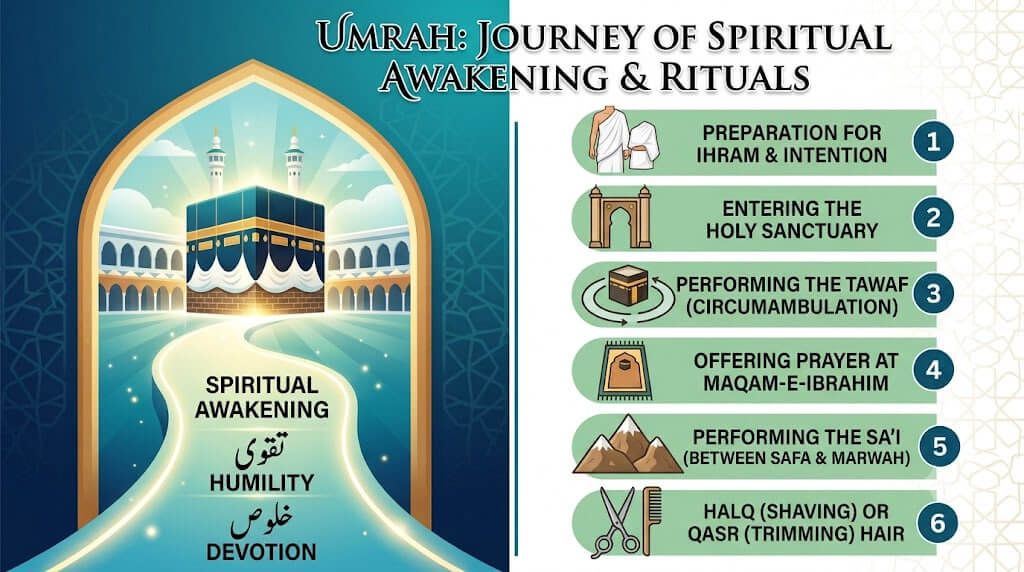
4. Step-by-Step Practical Guide to Performing Umrah
Executing the Umrah rituals in their correct sequence is essential. Here is the chronological step-by-step process according to Hanafi Fiqh:
Once Step 6 is complete, the restrictions of Ihram are lifted, and your Umrah is officially complete!
5. Restrictions of the Ihram State
While in the state of Ihram, several mundane activities become forbidden (Haraam) to test the believer’s self-discipline and focus:
For Men: Wearing any stitched clothing that conforms to the shape of the body (e.g., shirts, trousers, underwear, socks) or covering the head/face with a cap, hat, or turban.
For Women: Covering the face with a cloth that directly touches the skin. (Women may wear normal, loose-fitting stitched clothing).
For Both Genders:
Applying perfume, scented oils, or using heavily scented soaps.
Cutting, clipping, or pulling out any hair or nails from any part of the body.
Engaging in marital relations, foreplay, or sexual speech.
Hunting land animals or cutting trees/grass within the sacred boundary of Haram.
Arguing, fighting, or using abusive language.
6. Understanding Penances (Jinayaat/Kaffarah)
If a pilgrim violates the rules of Ihram, Hanafi jurisprudence categorizes the penalties based on the severity of the violation:
Dam (Sacrifice): This requires sacrificing a sheep or goat within the boundary of the Haram. It is triggered by major violations, such as wearing stitched clothing or covering the head for a full day (or 12 hours) consecutively, or applying perfume to an entire limb.
Sadqah (Sadaqat-ul-Fitr): Giving a fixed amount of charity to the poor of the Haram. This is triggered by minor violations, such as wearing stitched clothes or covering the head for less than half a day, or clipping only a few nails.
The Spiritual Essence
Beyond the physical steps, Umrah is a journey of deep spiritual renewal. When a believer sheds their worldly garments to wear the simple, uniform white sheets of Ihram, all worldly distinctions of wealth, race, and status disappear. Standing before the Kaaba, the pilgrim experiences a profound state of humility and absolute devotion to Allah.
By carefully adhering to the jurisprudential guidelines of Hanafi Fiqh, pilgrims can ensure their physical worship is sound, leaving their hearts and minds free to connect deeply with the Divine. May Allah Ta’ala accept the Umrah of all those who journey to His sacred house. Ameen!
- What Is Umrah?
- Meaning of Umrah
- Importance of Umrah in Islam
- Is Umrah Obligatory?
- Difference Between Hajj and Umrah
- Virtues of Performing Umrah
- Conditions Before Performing Umrah
- Pillars (Arkan) of Umrah
- Step-by-Step Umrah Guide
- Common Mistakes During Umrah
- Umrah for Women
- Health & Packing Checklist
- Frequently Asked Questions
- Conclusion
📖 Read in Urdu
عمرہ کیا ہے؟ حنفی فقہ کے مطابق ایک جامع گائیڈ
عمرہ اسلام کی مقدس ترین عبادات میں سے ایک ہے۔ اسے “چھوٹا حج” بھی کہا جاتا ہے۔ یہ ایک ایسی عظیم عبادت ہے جو روح کو پاک کرتی ہے، گناہوں کو دھوتی ہے اور بندے کو اپنے خالق کے قریب کرتی ہے۔
فقہ حنفی (امام اعظم ابو حنیفہ رحمہ اللہ کے مکتبِ فکر) کے مطابق، عمرہ کے احکام و مسائل کو فرائض، واجبات اور سنن کی ترتیب کے ساتھ واضح طور پر بیان کیا گیا ہے۔ اس مضمون میں عمرہ کی اہمیت، اس کے ارکان اور ادائیگی کا مکمل طریقہ تفصیل سے پیش کیا جا رہا ہے۔
1. عمرہ کا لغوی اور شرعی مفہوم
لغوی و شرعی تعریف
لغوی معنی: عربی زبان میں لفظ “عمرہ” کا لغوی معنی “زیارت کرنا” یا کسی آباد جگہ کا رخ کرنا ہے۔
شرعی معنی: شریعتِ اسلامیہ میں عمرہ سے مراد مخصوص میقات سے احرام باندھ کر، بیت اللہ کا طواف کرنا، صفا اور مروہ کے درمیان سعی کرنا، اور سر کے بال منڈوا کر یا کٹوا کر (حلق یا قصر) احرام سے باہر آنا ہے۔
عمرہ کا شرعی حکم (فقہ حنفی کی روشنی میں)
فقہ حنفی کے مستند اور راجح قول کے مطابق، زندگی میں ایک مرتبہ عمرہ کرنا سنتِ مؤکدہ ہے (بعض علماء کے نزدیک یہ واجب کے درجے میں ہے) بشرطیکہ انسان مالی اور جسمانی طور پر اس کی استطاعت رکھتا ہو۔
قرآن کریم میں ارشاد باری تعالیٰ ہے:
“اور حج اور عمرہ کو اللہ کے لیے مکمل کرو۔” (سورہ البقرہ: 196)
2. حج اور عمرہ میں فرق
اگرچہ یہ دونوں عبادتیں مکہ مکرمہ کے مقدس مقامات پر ہی ادا کی جاتی ہیں، لیکن ان کے احکام اور اوقات میں واضح فرق ہے:
| خصوصیت | حج | عمرہ |
| شرعی حیثیت | صاحبِ استطاعت پر زندگی میں ایک بار فرض ہے۔ | زندگی میں ایک بار کرنا سنتِ مؤکدہ ہے۔ |
| وقت | اس کے لیے اسلامی سال کے مخصوص ایام (8 سے 13 ذوالحجہ) مقرر ہیں۔ | یہ سال میں کسی بھی وقت ادا کیا جا سکتا ہے۔ |
| مکروہ اوقات | مخصوص ایام حج میں ہی ہوتا ہے۔ | 5 مخصوص دنوں (9 سے 13 ذوالحجہ) میں عمرہ کرنا مکروہِ تحریمی ہے۔ |
| بنیادی ارکان | اس میں وقوفِ عرفات، مزدلفہ، منیٰ اور جمرات کی رامی شامل ہے۔ | اس میں صرف احرام، طواف، سعی اور حلق/قصر ہوتا ہے۔ عرفات یا منیٰ جانا نہیں ہوتا۔ |
| قربانی (دم) | حجِ قران اور تمتع کرنے والوں پر قربانی واجب ہے۔ | عام حالات میں عمرہ کے لیے قربانی واجب نہیں ہوتی۔ |
3. عمرہ کے ارکان (فقہ حنفی کے مطابق)
فقہ حنفی میں عمرہ کے ارکان کو دو بنیادی حصوں میں تقسیم کیا گیا ہے: فرائض اور واجبات۔ ان دونوں کا فرق جاننا نہایت ضروری ہے کیونکہ فرض چھوٹنے سے عمرہ باطل ہو جاتا ہے، جبکہ واجب چھوٹنے سے دم (قربانی) لازم آتی ہے۔
الف۔ عمرہ کے فرائض (2 ہیں)
اگر ان میں سے ایک بھی رکن چھوٹ جائے تو عمرہ درست نہیں ہوگا اور نہ ہی کسی قربانی یا کفارے سے اس کی تلافی ہو سکتی ہے:
احرام: نیت اور تلبیہ کے ساتھ مخصوص لباس پہن کر عمرہ کی حدود میں داخل ہونا۔
طواف: کعبہ شریف کے اردگرد سات چکر لگانا۔
ب۔ عمرہ کے واجبات (2 ہیں)
اگر ان میں سے کوئی واجب بھولے سے یا نادانی میں چھوٹ جائے تو عمرہ تو ہو جائے گا، لیکن اس کی تلافی کے لیے حدودِ حرم میں “دم” (ایک بکری یا دنبہ ذبح کرنا) دینا واجب ہوگا:
سعی: صفا اور مروہ کی پہاڑیوں کے درمیان سات چکر لگانا۔
حلق یا قصر: پورے سر کے بال منڈوانا (حلق) یا کم از کم چوتھائی سر کے بال ایک پور (انگلی کے جوڑ) کے برابر کٹوانا (قصر)۔
4. عمرہ کا مرحلہ وار اور عملی طریقہ (Step-by-Step)
عمرہ کے ارکان کو ان کی ترتیب کے ساتھ ادا کرنا واجب ہے۔ نیچے دیے گئے مراحل کے مطابق عمرہ ادا کیا جاتا ہے:
5. احرام کی پابندیاں (ممنوعات)
احرام کی حالت میں داخل ہونے کے بعد درج ذیل امور سخت ممنوع ہو جاتے ہیں:
مردوں کے لیے: سلے ہوئے کپڑے (جیسے قمیض، شلوار، انڈر ویئر وغیرہ) پہننا اور سر یا چہرہ کسی ٹوپی، پگڑی یا کپڑے سے ڈھانپنا۔
خواتین کے لیے: چہرے پر ایسا نقاب ڈالنا جو جلد کو چھو رہا ہو۔ (خواتین سلے ہوئے عام لباس پہن سکتی ہیں)۔
دونوں کے لیے مشترکہ ممنوعات:
جسم یا کپڑوں پر خوشبو، عطر یا خوشبو دار صابن استعمال کرنا۔
جسم کے کسی بھی حصے سے بال کاٹنا، اکھاڑنا یا ناخن تراشنا۔
میاں بیوی کے مابین جنسی تعلقات یا اس حوالے سے گفتگو کرنا۔
حدودِ حرم کے اندر کسی جاندار کا شکار کرنا یا درخت اور پودے کاٹنا۔
لڑائی جھگڑا، گالی گلوچ یا فحش باتیں کرنا۔
6. جنایات اور ان کا کفارہ (غلطیوں کا تدارک)
اگر احرام کی حالت میں کوئی غلطی (جنایت) ہو جائے تو فقہ حنفی میں اس کے دو طرح کے کفارے مقرر ہیں:
دم (قربانی): بڑی غلطی (جیسے مرد کا پورا دن سلے ہوئے کپڑے پہننا یا پورے عضو پر خوشبو لگانا) کی صورت میں حدودِ حرم کے اندر ایک بکری یا دنبہ ذبح کرنا لازم ہوتا ہے۔
صدقہ: چھوٹی غلطی (جیسے چند گھنٹے سلے ہوئے کپڑے پہننا یا تھوڑی سی خوشبو لگانا) کی صورت میں صدقہ فطر کے برابر رقم یا غلہ کسی غریب کو دینا ہوتا ہے۔
روحانی پیغام
عمرہ محض چند ظاہری افعال کا نام نہیں، بلکہ یہ دلوں کی صفائی کا سفر ہے۔ جب بندہ دنیاوی لباس چھوڑ کر سفید چادروں میں لپٹ کر اپنے رب کے حضور کھڑا ہوتا ہے، تو امیری غریبی، رنگ و نسل اور قوم کا ہر فرق مٹ جاتا ہے۔
فقہ حنفی کے بتائے ہوئے ان اصولوں پر عمل کر کے ہم اپنی عبادت کو درست طریقے سے سرانجام دے سکتے ہیں تاکہ یہ بارگاہِ الٰہی میں مقبول ٹھہرے۔ اللہ تعالیٰ ہم سب کو بار بار اپنے گھر کی باادب زیارت نصیب فرمائے۔ آمین!