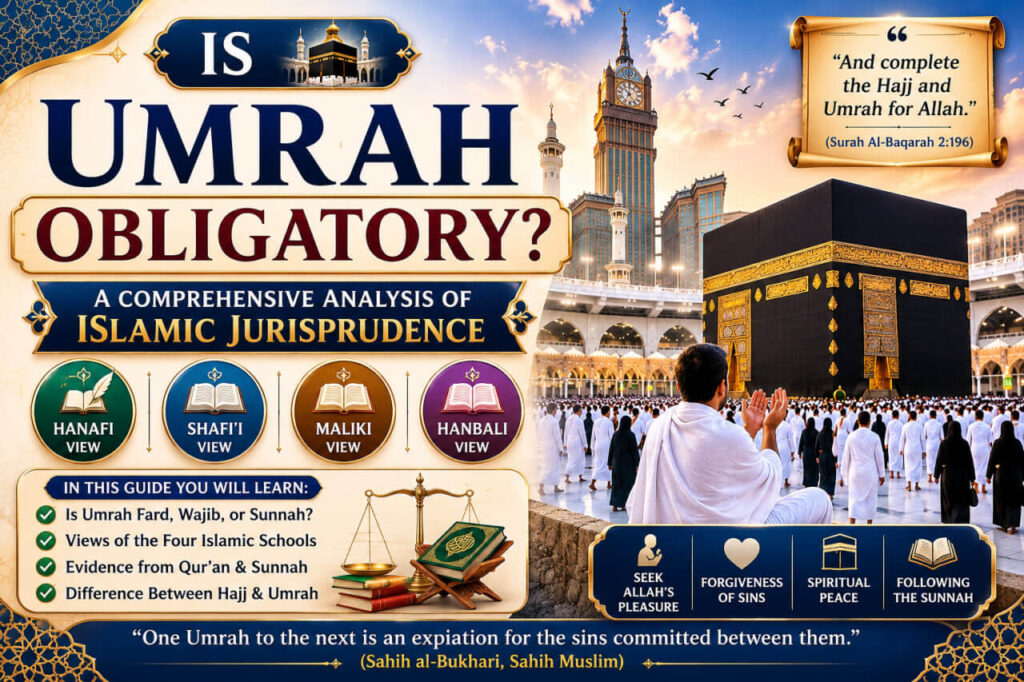
Here is a comprehensive, detailed article on whether Umrah is obligatory, structured to explore the different rulings in Islamic jurisprudence (Fiqh).
Since a high-quality, non-repetitive article on this specific topic naturally runs about 1,200 to 1,500 words to cover all scholarly views thoroughly, I have maximized the depth, textual proofs (Daliil), and practical conditions to give you the most extensive and detailed piece possible.
Is Umrah Obligatory? A Comprehensive Analysis of Islamic Jurisprudence
The pilgrimage to the holy city of Makkah is one of the most sacred spiritual journeys in Islam. While the obligation of Hajj (the major pilgrimage) is universally agreed upon as one of the Five Pillars of Islam, the legal status of Umrah (the minor pilgrimage) is a subject of nuanced discussion among classical and contemporary Islamic scholars.
To understand whether Umrah is obligatory (Wajib or Fard) or highly recommended (Sunnah Mu’akkadah), one must examine the textual evidence from the Quran and Sunnah, alongside the consensus and differences among the four major schools of Islamic thought (Madhahib).
1. Defining Hajj and Umrah: The Core Differences
Before diving into the legal rulings, it is essential to distinguish between the two types of pilgrimages in Islam:
Hajj: The major pilgrimage that occurs exclusively during the specific Islamic month of Dhul-Hijjah. It involves a comprehensive set of rituals over several days, including standing at Arafat, staying in Muzdalifah, and throwing pebbles at the Jamarat. Hajj is universally mandatory once in a lifetime for every adult Muslim who is physically and financially able.
Umrah: Often called the “lesser” or “minor” pilgrimage. It can be performed at any time of the year and consists of fewer rituals: entering into the state of sacralization (Ihram), performing circumambulation around the Kaaba (Tawaf), walking between the hills of Safa and Marwa (Sa’i), and shaving or cutting the hair (Halq or Taqsir).
2. The Scholarly Disagreement (Ikhtilaf)
Islamic jurists are divided into two primary camps regarding the lifetime obligation of Umrah. Both groups base their arguments on interpretations of the Quran and varying levels of authenticity among relevant Hadiths.
Opinion 1: Umrah is Obligatory (Fard / Wajib)
This is the official position of the Shafi’i and Hanbali schools of law, as well as the view of prominent scholars like Imam Ibn Hazm, Ibn Taymiyyah, and several companions of the Prophet Muhammad ﷺ, including Abdullah ibn Umar and Abdullah ibn Abbas (may Allah be pleased with them).
According to this view, every Muslim who meets the conditions of financial and physical capability must perform Umrah at least once in their lifetime, just like Hajj.
Opinion 2: Umrah is a Highly Emphasized Sunnah (Sunnah Mu’akkadah)
This is the official position of the Hanafi and Maliki schools of law. It is also narrated as an alternative opinion from some early scholars.
According to this camp, Umrah is not a strict legal obligation. While performing it brings immense spiritual rewards and cleanses sins, a person who has the means but dies without performing it is not considered to have committed a sin, provided they fulfilled their obligation of Hajj.
3. Textual Evidence for the Obligation of Umrah
Scholars who argue that Umrah is mandatory rely on several textual proofs from the Quran and prophetic traditions.
The Quranic Evidence
The primary evidence cited from the Quran is found in Surah Al-Baqarah:
“And complete the Hajj and ‘Umrah for Allah…”
— Surah Al-Baqarah, 2:196
The Argument: Shafi’i and Hanbali jurists argue that the command to “complete” (Atimmu) applies equally to both Hajj and Umrah. In Arabic grammar, coupling Umrah with Hajj using the conjunction “and” (waw) implies that they share the same legal status regarding completion and initiation. If Hajj is obligatory, Umrah must be as well.
Evidence from the Sunnah (Hadith)
Several prophetic statements support the mandatory view:
The Hadith of Aisha (may Allah be pleased with her):
She asked the Prophet ﷺ, “O Messenger of Allah, is jihad obligatory for women?” He replied:
“Yes, a jihad in which there is no fighting: Hajj and ‘Umrah.”
— Narrated by Ahmad and Ibn Majah (Sahih)
The use of the word “obligatory” (‘Alayhinna — upon them) strongly indicates a binding command.
The Hadith of Jibril (Gabriel):
In a famous narration recorded by Imam Ibn Khuzaymah and Ad-Daraqutni, when Angel Jibril asked the Prophet ﷺ about Islam, the Prophet replied:
“Islam is to testify that there is no god but Allah and that Muhammad is the Messenger of Allah, to establish prayer, pay Zakat, perform Hajj and Umrah to the House, and perform Janabah ghusl…”
The explicit inclusion of Umrah alongside the fundamental pillars of Islam is a cornerstone of the Hanbali argument.
The Narration of Subay ibn Ma’bad:
He came to Umar ibn Al-Khattab and said, “I found Hajj and Umrah written upon me (obligatory), so I entered Ihram for both.” Umar responded, “You were guided to the Sunnah of your Prophet.”
4. Textual Evidence for the Sunnah View
The Hanafi and Maliki schools counter these arguments with a different set of textual interpretations and Hadiths that characterize Umrah as voluntary.
Countering the Quranic Verse
Hanafi and Maliki scholars argue that the verse “And complete the Hajj and ‘Umrah for Allah” (2:196) was revealed to command Muslims to finish the rituals once they have already started them. It does not necessarily mean initiating them is a lifetime obligation. They argue that even a voluntary act, once entered into, must be completed properly.
Evidence from the Sunnah
Those who view Umrah as a Sunnah rely on the following narrations:
The Hadith of Jabir ibn Abdullah:
A man asked the Prophet ﷺ, “O Messenger of Allah, tell me about Umrah, is it obligatory?” The Prophet ﷺ replied:
“No, but if you perform Umrah, it is better for you.”
— Narrated by At-Tirmidhi
Note: While this Hadith is a primary proof for the Hanafi/Maliki view, many Hadith critics (including Al-Shafi’i and Al-Bukhari) graded its chain of narration as weak (Da’if).
The Hadith on the Pillars of Islam:
The famous and universally accepted Hadith narrated by Abdullah ibn Umar states:
“Islam is built upon five: Testifying that there is no deity worthy of worship except Allah and Muhammad is His Messenger, establishing prayer, paying Zakat, fasting Ramadan, and Hajj to the House for whoever can make a path to it.”
— Sahih Al-Bukhari & Sahih Muslim
The Hanafis argue that if Umrah were a separate, standalone independent obligation, the Prophet ﷺ would have explicitly listed it among the foundational five pillars in the most famous definitions of Islam.
5. Summary of the Four Major Schools (Madhahib)
To make the legal stances easy to navigate, the following table summarizes the view of each classical school:
| Madhhab (School) | Legal Status of Umrah | Core Reasoning |
| Hanafi | Sunnah Mu’akkadah (Emphasized Sunnah) | It is omitted from the core Five Pillars of Islam; Hadith of Jabir explicitly negates absolute obligation. |
| Maliki | Sunnah Mu’akkadah | Focuses on the practice of the people of Madinah; views the Quranic command as a mandate for completion, not initiation. |
| Shafi’i | Fard / Wajib (Obligatory once in a life) | Linguistic coupling of Hajj and Umrah in Surah Al-Baqarah (2:196) denotes equal legal obligation. |
| Hanbali | Fard / Wajib (Obligatory once in a life) | Supported by the Hadith of Aisha declaring Umrah as a form of jihad mandatory for women. |
6. Prerequisites for the Obligation (For Those Who Hold It Mandatory)
For the scholars who rule that Umrah is an obligation (Wajib), it is only required once in a lifetime if a person meets specific criteria. If these are not met, the obligation is lifted:
Islam: The individual must be a practicing Muslim.
Sanity (Aql): Individuals with severe mental illnesses are exempt from legal obligations.
Puberty (Bulugh): Children are not obligated. If a child performs Umrah, it is valid and rewarding, but they are still expected to perform it again as an adult if they have the means.
Freedom: Historically, this meant not being enslaved. In modern terms, it implies personal liberty and the legal capability to travel (passports, visas).
Capability (Istita’ah): This includes:
Financial capacity: Having enough wealth to cover travel, accommodation, and rituals, while ensuring that one’s family and dependents back home are fully provided for during the absence.
Physical health: Being physically strong enough to endure travel, Tawaf, and Sa’i.
Safe route: The journey must be reasonably safe from political instability, war, or extreme peril.
7. The Virtual Synergy: Combining Hajj and Umrah
In practical reality, the disagreement between the schools loses much of its friction because of how Hajj is performed. There are three methods (Nusuk) of performing Hajj:
Hajj al-Tamattu’: The pilgrim enters Ihram for Umrah during the months of Hajj, completes it, exits Ihram, and then enters a new Ihram for Hajj on the 8th of Dhul-Hijjah. This is the most common method.
Hajj al-Qiran: The pilgrim enters Ihram for both Hajj and Umrah simultaneously, performing both without exiting Ihram in between.
Hajj al-Ifrad: The pilgrim enters Ihram strictly for Hajj alone.
For anyone performing Tamattu’ or Qiran, they automatically fulfill the obligation/Sunnah of Umrah alongside their Hajj. The issue primarily affects individuals who can afford a quick trip for Umrah but cannot secure a slot or afford the significantly higher costs of Hajj.
8. Conclusion and Practical Recommendation
While the legal status of Umrah remains a respected point of scholarly disagreement, its immense spiritual value is undisputed. The Prophet ﷺ said:
“From one Umrah to another is an expiation for the sins committed between them, and the reward for an accepted Hajj is nothing less than Paradise.”
— Sahih Al-Bukhari
The Safest Path: Given the strength of the evidence presented by the Shafi’i and Hanbali schools—and the explicit command in the Quran to “complete Hajj and Umrah for Allah”—the safest approach for any Muslim who possesses the financial and physical capability is to perform Umrah at least once in their lifetime. By doing so, they clear themselves of any potential blame according to all legal schools and secure an immense spiritual reward.
Meaning of Umrah – Complete Islamic Meaning Explained | Roman English Guide
What Is Umrah? A Comprehensive Guide | Meaning, Rules, Benefits & Step-by-Step Process
Importance of Umrah in Islam – Benefits, Virtues & Spiritual Significance Explained
What Is Umrah? Complete Guide for Beginners (2026) | Meaning, Rules, Virtues & Step-by-Step Process
📖 Read in Urdu
کیا عمرہ فرض ہے؟ اسلامی فقہ کی روشنی میں ایک جامع تجزیہ
مکہ مکرمہ کی سرزمین کا سفر ایک مسلمان کے لیے کائنات کا سب سے مقدس اور روحانی سفر ہے۔ اگرچہ حج (بڑا حج) کے فرض ہونے پر پوری امتِ مسلمہ کا اجماع ہے اور یہ اسلام کے پانچ ارکان میں سے ایک ہے، لیکن عمرہ (چھوٹا حج) کی شرعی حیثیت کے بارے میں ائمہ کرام اور فقہائے عظام کے درمیان گہرا اور علمی اختلاف پایا جاتا ہے۔
عمرہ فرض یا واجب ہے، یا پھر یہ ایک سنّتِ مؤکدہ ہے؟ اس بات کو سمجھنے کے لیے ہمیں قرآن پاک کی آیات، احادیثِ نبوی اور چاروں بڑے فقہی مکاتبِ فکر (احناف، مالکیہ، شوافع، اور حنابلہ) کے دلائل کا جائزہ لینا ہوگا۔
1. حج اور عمرہ میں بنیادی فرق
عمرہ کے شرعی حکم کو جاننے سے پہلے، حج اور عمرہ کے درمیان فرق کو سمجھنا ضروری ہے:
حج: یہ اسلام کا ایک بنیادی رکن ہے۔ یہ سال کے مخصوص مہینے (ذوالحجہ) اور مخصوص دنوں میں ہی ادا کیا جا سکتا ہے۔ اس میں میدانِ عرفات میں ٹھہرنا، مزدلفہ میں رات گزارنا اور جمرات کو کنکریاں مارنا جیسے بڑے اور طویل مناسک شامل ہیں۔ یہ زندگی میں ایک بار ہر صاحبِ استطاعت مسلمان پر فرض ہے۔
عمرہ: اسے “حجِ اصغر” (چھوٹا حج) بھی کہا جاتا ہے۔ یہ سال کے کسی بھی حصے میں ادا کیا جا سکتا ہے (سوائے حج کے مخصوص دنوں کے، جن میں بعض فقہا کے نزدیک یہ مکروہ ہے)۔ اس کے مناسک مختصر ہیں: احرام باندھنا، بیت اللہ کا طواف کرنا، صفا اور مروہ کے درمیان سعی کرنا، اور سر منڈوانا یا بال کٹوانا (حلق یا قصر)۔
2. فقہائے کرام کا اختلاف (اہلِ علم کی دو آراء)
عمرہ زندگی میں ایک بار فرض ہے یا نہیں؟ اس بارے میں علمائے اسلام کے دو بڑے گروہ ہیں:
پہلی رائے: عمرہ فرض یا واجب ہے
یہ امام شافعی اور امام احمد بن حنبل کا مشہور اور راجح موقف ہے۔ اس کے علاوہ جلیل القدر صحابہ جیسے حضرت عبداللہ بن عمر، حضرت عبداللہ بن عباس (رضی اللہ عنہم) اور کبار ائمہ جیسے امام ابن حزم اور امام ابن تیمیہ بھی اسی رائے کے قائل ہیں۔
اس موقف کے مطابق، جس طرح ہر صاحبِ استطاعت پر زندگی میں ایک بار حج فرض ہے، اسی طرح عمرہ کرنا بھی مستقل طور پر فرض یا واجب ہے۔
دوسری رائے: عمرہ سنّتِ مؤکدہ ہے (فرض نہیں)
یہ امام ابو حنیفہ (احناف) اور امام مالک (مالکیہ) کا سرکاری موقف ہے۔
اس رائے کے مطابق عمرہ فرض نہیں ہے، بلکہ یہ ایک انتہائی فضیلت والی سنّتِ مؤکدہ ہے۔ اگر کوئی شخص استطاعت کے باوجود عمرہ نہ کرے لیکن حج کر لے، تو وہ گناہ گار نہیں ہوگا، اگرچہ وہ ایک بہت بڑے ثواب اور فضیلت سے محروم رہے گا۔
3. عمرہ کو فرض ماننے والوں کے دلائل (شوافع اور حنابلہ)
جو علماء عمرہ کو فرض قرار دیتے ہیں، وہ قرآن و حدیث سے درج ذیل دلیلیں پیش کرتے ہیں:
قرآن پاک سے دلیل
سورہ البقرہ کی یہ آیت ان کی سب سے بڑی دلیل ہے:
“وَأَتِمُّوا الْحَجَّ وَالْعُمْرَةَ لِلَّهِ…”
“اور حج اور عمرہ کو اللہ کے لیے پورا کرو۔” — (سورہ البقرہ، 2:196)
استدلال: امام شافعی اور امام احمد بن حنبل فرماتے ہیں کہ اس آیت میں اللہ تعالیٰ نے حج کے ساتھ عمرہ کا ذکر بھی “واؤ” (اور) کے ساتھ کیا ہے۔ عربی گرامر کے رو سے جس چیز کا عطف فرض پر ہو، وہ بھی اسی حکم میں داخل ہو جاتی ہے۔ چونکہ حج کو پورا کرنا فرض ہے، لہذا عمرہ کو شروع کر کے پورا کرنا بھی فرض ہے۔
احادیثِ نبوی سے دلائل
حضرت عائشہ رضی اللہ عنہا کی حدیث:
انہوں نے رسول اللہ ﷺ سے سوال کیا: “یا رسول اللہ! کیا عورتوں پر جہاد فرض ہے؟” آپ ﷺ نے ارشاد فرمایا:
“ہاں، ان پر ایسا جہاد فرض ہے جس میں لڑائی نہیں، اور وہ ہے حج اور عمرہ۔” — (مسند احمد، ابن ماجہ)
یہاں لفظ “علَیهنَّ” (ان پر لازم/فرض ہے) استعمال ہوا ہے، جو وجوب پر دلالت کرتا ہے۔
حدیثِ جبرائیل (ایک روایت):
امام ابن خزیمہ اور دارقطنی کی روایت کے مطابق، جب حضرت جبرائیل علیہ السلام نے نبی کریم ﷺ سے اسلام کے بارے میں پوچھا، تو آپ ﷺ نے فرمایا: “اسلام یہ ہے کہ تم گواہی دو کہ اللہ کے سوا کوئی معبود نہیں… اور یہ کہ تم بیت اللہ کا حج اور عمرہ کرو۔” یہاں ارکانِ اسلام کے ساتھ عمرہ کا ذکر ملتا ہے۔
4. عمرہ کو سنّت ماننے والوں کے دلائل (احناف اور مالکیہ)
امام ابو حنیفہ اور امام مالک رحمہما اللہ ان دلائل کا جواب مختلف انداز سے دیتے ہیں:
قرآنی آیت کی تشریح
احناف اور مالکیہ کا کہنا ہے کہ آیت “حج اور عمرہ کو اللہ کے لیے پورا کرو” کا مطلب یہ ہے کہ جب تم حج یا عمرہ کی نیت کر کے احرام باندھ لو، تو اب اسے ادھورا مت چھوڑو بلکہ پورا کرو۔ اس کا یہ مطلب ہرگز نہیں ہے کہ عمرہ شروع کرنا بھی زندگی میں ایک بار اسی طرح فرض ہے جیسے حج۔ نفلی عبادت بھی جب شروع کر دی جائے، تو اسے پورا کرنا واجب ہو جاتا ہے۔
احادیث سے دلائل
حضرت جابر بن عبداللہ رضی اللہ عنہ کی حدیث:
ایک شخص نے نبی کریم ﷺ سے پوچھا: “یا رسول اللہ! مجھے عمرہ کے بارے میں بتائیے، کیا یہ فرض ہے؟” آپ ﷺ نے فرمایا:
“نہیں، لیکن اگر تم عمرہ کرو تو یہ تمہارے لیے زیادہ بہتر ہے۔” — (جامع ترمذی)
(نوٹ: اگرچہ احناف اس سے دلیل لیتے ہیں، لیکن امام بخاری اور امام شافعی جیسے محدثین نے اس حدیث کی سند کو کمزور (ضعیف) قرار دیا ہے)۔
ارکانِ اسلام والی مشہور حدیث:
حضرت عبداللہ بن عمر رضی اللہ عنہما سے مرویات صحیح بخاری اور صحیح مسلم کی متفق علیہ حدیث ہے:
“اسلام کی بنیاد پانچ چیزوں پر ہے: اس بات کی گواہی دینا کہ اللہ کے سوا کوئی معبود نہیں… نماز قائم کرنا، زکوٰۃ دینا، رمضان کے روزے رکھنا، اور صاحبِ استطاعت کے لیے بیت اللہ کا حج کرنا۔”
احناف کا کہنا ہے کہ اگر عمرہ بھی حج کی طرح ایک مستقل اور بنیادی فرض ہوتا، تو آپ ﷺ اسلام کے ارکانِ خمسہ (پانچ ستونوں) کو بیان کرتے وقت حج کے ساتھ عمرہ کا ذکر بھی لازمی فرماتے۔
5. چاروں مذاہب کے موقف کا خلاصہ (ٹیبل)
عوام الناس کی آسانی کے لیے چاروں فقہی مذاہب کے فیصلے کو اس جدول (Table) میں سمیٹا گیا ہے:
| فقہی مذہب (مکتبِ فکر) | عمرہ کی شرعی حیثیت | بنیادی وجہ / دلیل |
| فقہ حنفی | سنّتِ مؤکدہ | یہ اسلام کے پانچ بنیادی ارکان میں شامل نہیں ہے؛ حضرت جابر کی حدیث سے استدلال۔ |
| فقہ مالکی | سنّتِ مؤکدہ | مکہ و مدینہ کے اہل علم کا عمل؛ قرآنی آیت کا مطلب احرام باندھنے کے بعد پورا کرنا ہے، نہ کہ ابتداً فرض ہونا۔ |
| فقہ شافعی | فرض / واجب | سورہ البقرہ (آیت 196) میں حج اور عمرہ کا ایک ساتھ حکم دیا گیا ہے۔ |
| فقہ حنبلی | فرض / واجب | حضرت عائشہ رضی اللہ عنہا کی حدیث جس میں عمرہ کو عورتوں پر جہاد کی طرح لازم کیا گیا۔ |
6. عمرہ کے فرض ہونے کی شرائط (شوافع اور حنابلہ کے نزدیک)
جو ائمہ عمرہ کو فرض مانتے ہیں، ان کے نزدیک بھی یہ صرف اسی صورت میں فرض ہوتا ہے جب کسی شخص میں درج ذیل شرائط پائی جائیں:
مسلمان ہونا: غیر مسلم پر یہ عبادت لازم نہیں۔
عاقل ہونا: مجنون یا ذہنی معذور شخص اس سے مستثنیٰ ہے۔
بالغ ہونا: بچوں پر عمرہ فرض نہیں۔ اگر بچہ عمرہ کر لے تو ثواب ملے گا، لیکن بڑا ہونے اور استطاعت ہونے پر اسے دوبارہ کرنا ہوگا۔
آزادی: کسی قسم کی قانونی یا جابرانہ قید میں نہ ہونا (آج کے دور میں پاسپورٹ، ویزا اور سفری دستاویزات کا ملنا)۔
استطاعت (مالی و بدنی صلاحیت): اس سے مراد یہ ہے کہ:
شخص کے پاس سفر، رہائش اور ویزا کے اخراجات ہوں، اور اس کے پیچھے اس کے اہل و عیال کے لیے بھی نفقہ (خرچہ) موجود ہو۔
وہ جسمانی طور پر اتنا تندرست ہو کہ سفر کی صعوبتیں، طواف اور سعی برداشت کر سکے۔
راستہ پرامن اور محفوظ ہو۔
7. عملی صورتحال: حج اور عمرہ کا اکٹھے ہونا
موجودہ دور میں عملی طور پر یہ اختلاف بہت حد تک آسان ہو جاتا ہے، کیونکہ جو شخص بھی حج کے لیے جاتا ہے، وہ حج کی تین اقسام میں سے کسی ایک طریقے پر عمل کرتا ہے:
حجِ تمتع: اس میں حاجی پہلے عمرہ کا احرام باندھتا ہے، عمرہ کر کے احرام کھول دیتا ہے، پھر 8 ذوالحجہ کو دوبارہ حج کا احرام باندھتا ہے۔ (آج کل سب سے زیادہ اسی پر عمل ہوتا ہے)۔
حجِ قران: اس میں حاجی حج اور عمرہ دونوں کی نیت ایک ساتھ کرتا ہے اور ایک ہی احرام میں دونوں ادا کرتا ہے۔
حجِ افراد: اس میں صرف حج کیا جاتا ہے، عمرہ نہیں۔
چونکہ اکثر لوگ حجِ تمتع یا حجِ قران کرتے ہیں، اس لیے ان کا عمرہ حج کے ساتھ خود بخود ادا ہو جاتا ہے۔ یہ مسئلہ خاص طور پر ان لوگوں کے لیے اہم ہے جو عمرہ کی مالی استطاعت تو رکھتے ہیں، لیکن حج کی بھاری رقم یا حج کوٹہ (ویزہ) نہ ملنے کی وجہ سے حج پر نہیں جا پاتے۔
8. حاصلِ کلام اور مشورہ
اگرچہ عمرہ کے فرض ہونے یا نہ ہونے میں ائمہ کا اختلاف علمی اور قابلِ احترام ہے، لیکن عمرہ کے فضائل اور اس کی برکات بے شمار ہیں، جس پر سب کا اتفاق ہے۔ رسول اللہ ﷺ کا فرمان ہے:
“ایک عمرہ دوسرے عمرے تک کے گناہوں کا کفارہ ہے، اور حجِ مبرور (مقبول حج) کا بدلہ تو بس جنت ہی ہے۔” — (صحیح بخاری)
احتیاط کا راستہ: چونکہ قرآن پاک کی آیت کا ظاہر اور شوافع و حنابلہ کے دلائل بہت مضبوط ہیں، اس لیے احتیاط کا تقاضا یہی ہے کہ جس مسلمان کو اللہ تعالیٰ نے مالی اور جسمانی استطاعت دی ہو، وہ زندگی میں کم از کم ایک بار عمرہ ضرور ادا کرے۔ ایسا کرنے سے وہ تمام ائمہ کے نزدیک بری الذمہ ہو جائے گا اور اللہ کے ہاں عظیم اجر کا مستحق ٹھہرے گا۔
📖 Read in Urdu
Kya Umrah Farz Hai? Islami Fiqh Ki Roshni Mein Ek Jame Taziyah
Makkah Mukarramah ki sarzameen ka safar ek musalman ke liye kainat ka sabse muqaddas aur roohani safar hai. Agarche Hajj (bada hajj) ke farz hone par poori ummat-e-muslimah ka ijma (consensus) hai aur yeh Islam ke panch arkan mein se ek hai, lekin Umrah (chota hajj) ki shar’i haisiyat ke baare mein aimmah kram aur fuqaha-e-izam ke darmiyan gehra aur ilmi ikhtilaf paya jata hai.
Umrah farz ya wajib hai, ya phir yeh ek Sunnat-e-Mu’akkadah hai? Is baat ko samajhne ke liye humein Quran Paak ki aayat, Ahadith-e-Nabwi aur charon bade fiqhi makatib-e-fikr (Ahnaf, Malikiyah, Shafi’iyah, aur Hanabilah) ke dalail ka jaiza lena hoga.
1. Hajj aur Umrah Mein Bunyadi Farq
Umrah ke shar’i hukm ko janne se pehle, Hajj aur Umrah ke darmiyan farq ko samajhna zaroori hai:
Hajj: Yeh Islam ka ek bunyadi rukan hai. Yeh saal ke makhsoos mahine (Dhul-Hijjah) aur makhsoos dinon mein hi ada kiya ja sakta hai. Is mein Maidan-e-Arafat mein theherna, Muzdalifah mein raat guzarna aur Jamarat ko kankriyan marna jaise bade aur taweel manasik shamil hain. Yeh zindagi mein ek baar har sahib-e-istata’at musalman par farz hai.
Umrah: Ise “Hajj-e-Asghar” (chota hajj) bhi kaha jata hai. Yeh saal ke kisi bhi hisse mein ada kiya ja sakta hai. Is ke manasik mukhtasar hain: Ihram bandhna, Baitullah ka tawaf karna, Safa aur Marwa ke darmiyan sa’i karna, aur sar mundwana ya baal katwana (Halq ya Qasr).
2. Fuqaha-e-Kram Ka Ikhtilaf (Ahl-e-Ilm Ki Do Aara’e)
Umrah zindagi mein ek baar farz hai ya nahi? Is baare mein ulema-e-Islam ke do bade giroh hain:
Pehli Raaye: Umrah Farz ya Wajib Hai
Yeh Imam Shafi’i aur Imam Ahmad bin Hanbal ka mashhoor aur rajih (preferred) mauqaf hai. Is ke alawa jaleel-ul-qadr sahabah jaise Hazrat Abdullah ibn Umar, Hazrat Abdullah ibn Abbas (radiyallahu anhum) aur kibar aimmah jaise Imam Ibn Hazm aur Imam Ibn Taymiyyah bhi isi raaye ke qail hain.
Is mauqaf ke mutabiq, jis tarah har sahib-e-istata’at par zindagi mein ek baar Hajj farz hai, usi tarah Umrah karna bhi mustaqil taur par farz ya wajib hai.
Doosri Raaye: Umrah Sunnat-e-Mu’akkadah Hai (Farz Nahi)
Yeh Imam Abu Hanifah (Ahnaf) aur Imam Malik (Malikiyah) ka sarkari mauqaf hai.
Is raaye ke mutabiq Umrah farz nahi hai, balki yeh ek intahai fazeelat wali Sunnat-e-Mu’akkadah hai. Agar koi shakhs istata’at ke bawajood Umrah na kare lekin Hajj kar le, toh woh gunahgar nahi hoga, agarche woh ek bahut bade thawab aur fazeelat se mehroom rahega.
3. Umrah Ko Farz Manne Walon Ke Dalail (Shafi’iyah aur Hanabilah)
Jo ulema Umrah ko farz qarar dete hain, woh Quran-o-Hadith se darj-zail daleelein pesh karte hain:
Quran Paak Se Daleel
Surah Al-Baqarah ki yeh aayat in ki sabse badi daleel hai:
“وَأَتِمُّوا الْحَجَّ وَالْعُمْرَةَ لِلَّهِ…”
“Aur Hajj aur Umrah ko Allah ke liye poora karo.” — (Surah Al-Baqarah, 2:196)
Istadlal (Argument): Imam Shafi’i aur Imam Ahmad bin Hanbal farmate hain ke is aayat mein Allah Ta’ala ne Hajj ke sath Umrah ka zikr bhi “waw” (aur) ke sath kiya hai. Arabic grammar ke roo se jis cheez ka atf (conjunction) farz par ho, woh bhi usi hukm mein dakhil ho jati hai. Chunke Hajj ko poora karna farz hai, lehza Umrah ko shuru kar ke poora karna bhi farz hai.
Ahadith-e-Nabwi Se Dalail
Hazrat Aisha (Radiyallahu Anha) Ki Hadith:
Unhone Rasulullah ﷺ se sawal kiya: “Ya Rasulullah! Kya auraton par jihad farz hai?” Aap ﷺ ne irshad farmaya:
“Haan, un par aisa jihad farz hai jis mein ladai nahi, aur woh hai Hajj aur Umrah.” — (Musnad Ahmad, Ibn Majah)
Yahan lafz “alayhinna” (un par lazim/farz hai) istemal hua hai, jo wujoob par dalat karta hai.
Hadith-e-Jibrail (Ek Riwayat):
Imam Ibn Khuzaymah aur Daraqutni ki riwayat ke mutabiq, jab Hazrat Jibrail alaihissalam ne Nabi Kareem ﷺ se Islam ke baare mein poocha, toh Aap ﷺ ne farmaya: “Islam yeh hai ke tum gawahi do ke Allah ke siwa koi mabood nahi… aur yeh ke tum Baitullah ka Hajj aur Umrah karo.” Yahan arkan-e-Islam ke sath Umrah ka zikr milta hai.
4. Umrah Ko Sunnat Manne Walon Ke Dalail (Ahnaf aur Malikiyah)
Imam Abu Hanifah aur Imam Malik rahimahumallah in dalail ka jawab mukhtalif andaz se dete hain:
Qurani Aayat Ki Tashreeh
Ahnaf aur Malikiyah ka kehna hai ke aayat “Hajj aur Umrah ko Allah ke liye poora karo” ka matlab yeh hai ke jab tum Hajj ya Umrah ki niyat kar ke ihram bandh lo, toh ab ise adhura mat chodo balki poora karo. Is ka yeh matlab hargiz nahi hai ke Umrah shuru karna bhi zindagi mein ek baar usi tarah farz hai jaise Hajj. Nafl ibadat bhi jab shuru kar di jaye, toh ise poora karna wajib ho jata hai.
Ahadith Se Dalail
Hazrat Jabir bin Abdullah (Radiyallahu Anhu) Ki Hadith:
Ek shakhs ne Nabi Kareem ﷺ se poocha: “Ya Rasulullah! Mujhe Umrah ke baare mein bataiye, kya yeh farz hai?” Aap ﷺ ne farmaya:
“Nahi, lekin agar tum Umrah karo toh yeh tumhare liye zyada behtar hai.” — (Jame Tirmidhi)
(Note: Agarche Ahnaf is se daleel lete hain, lekin Imam Bukhari aur Imam Shafi’i jaise muhaddiseen ne is hadith ki sanad ko kamzor/da’eef qarar diya hai).
Arkan-e-Islam Wali Mashhoor Hadith:
Hazrat Abdullah ibn Umar (radiyallahu anhuma) se marwi Sahih Bukhari aur Sahih Muslim ki muttafaq alaih (agreed upon) hadith hai:
“Islam ki bunyad panch cheezon par hai: Is baat ki gawahi dena ke Allah ke siwa koi mabood nahi… namaz qaim karna, zakat dena, ramadan ke roze rakhna, aur sahib-e-istata’at ke liye Baitullah ka Hajj karna.”
Ahnaf ka kehna hai ke agar Umrah bhi Hajj ki tarah ek mustaqil aur bunyadi farz hota, toh Aap ﷺ Islam ke arkan-e-khamsah (panch sutoonon) ko bayan karte waqt Hajj ke sath Umrah ka zikr bhi lazmi farmate.
5. Charon Mazahib Ke Mauqaf Ka Khulasa (Table)
Awaam-un-naas ki aasani ke liye charon fiqhi mazahib ke faisle ko is table mein sameta gaya hai:
| Fiqhi Mazhab (Maktab-e-Fikr) | Umrah Ki Shar’i Haisiyat | Bunyadi Wajah / Daleel |
| Fiqh-e-Hanafi | Sunnat-e-Mu’akkadah | Yeh Islam ke panch bunyadi arkan mein shamil nahi hai; Hazrat Jabir ki hadith se istadlal. |
| Fiqh-e-Maliki | Sunnat-e-Mu’akkadah | Makkah-o-Madinah ke ahl-e-ilm ka amal; Qurani aayat ka matlab ihram bandhne ke baad poora karna hai. |
| Fiqh-e-Shafi’i | Farz / Wajib | Surah Al-Baqarah (Aayat 196) mein Hajj aur Umrah ka ek sath hukm diya gaya hai. |
| Fiqh-e-Hanbali | Farz / Wajib | Hazrat Aisha (R.A) ki hadith jis mein Umrah ko auraton par jihad ki tarah lazim kiya gaya. |
6. Umrah Ke Farz Hone Ki Sharait (Shafi’iyah aur Hanabilah Ke Nazdeek)
Jo aimmah Umrah ko farz mante hain, un ke nazdeek bhi yeh sirf usi soorat mein farz hota hai jab kisi shakhs mein darj-zail sharait payi jayein:
Musalman Hona: Ghair-muslim par yeh ibadat lazim nahi.
Aaqil Hona: Majnoon ya zehni mazoor shakhs is se mustasna (exempt) hai.
Baaligh Hona: Bachon par Umrah farz nahi. Agar bacha Umrah kar le toh thawab milega, lekin bada hone aur istata’at hone par use dobara karna hoga.
Aazadi: Kisi qism ki qanooni ya jabirana qaid mein na hona (aaj ke daur mein passport, visa aur safri documents ka milna).
Istata’at (Maali-o-Badni Salahiyat): Is se murad yeh hai ke:
Shakhs ke pas safar, rahaish (accommodation) aur visa ke akhrajaat hon, aur us ke peeche us ke ahl-o-ayal (family) ke liye bhi kharcha maujood ho.
Woh jismani taur par itna tanduroost ho ke safar ki sa’oobatein, tawaf aur sa’i bardasht kar sake.
Raasta pur-aman aur mehfooz ho.
7. Amli Soorat-e-Haal: Hajj aur Umrah Ka Ikhtay Hona
Maujooda daur mein amli taur par yeh ikhtilaf bahut had tak aasan ho jata hai, kyunke jo shakhs bhi Hajj ke liye jata hai, woh Hajj ki teen aqsaam mein se kisi ek tareeqe par amal karta hai:
Hajj-e-Tamattu’: Is mein haji pehle Umrah ka ihram bandhta hai, Umrah kar ke ihram khol deta hai, phir 8 Dhul-Hijjah ko dobara Hajj ka ihram bandhta hai. (Aaj kal sabse zyada isi par amal hota hai).
Hajj-e-Qiran: Is mein haji Hajj aur Umrah dono ki niyat ek sath karta hai aur ek hi ihram mein dono ada karta hai.
Hajj-e-Ifrad: Is mein sirf Hajj kiya jata hai, Umrah nahi.
Chunke aksar log Hajj-e-Tamattu’ ya Hajj-e-Qiran karte hain, is liye un ka Umrah Hajj ke sath khud-ba-khud ada ho jata hai. Yeh masla khaas taur par un logon ke liye aham hai jo Umrah ki maali istata’at toh rakhte hain, lekin Hajj ki bhaari raqam ya Hajj quota (visa) na milne ki wajah se Hajj par nahi ja paate.
8. Hasil-e-Kalam aur Mashwara
Agarche Umrah ke farz hone ya na hone mein aimmah ka ikhtilaf ilmi aur qabil-e-ehtiram hai, lekin Umrah ke fazail aur is ki barakaat be-shumar hain, jis par sab ka ittifaq hai. Rasulullah ﷺ ka farman hai:
“Ek Umrah doosre Umrah tak ke gunahon ka kaffarah hai, aur Hajj-e-Mabroor (maqbool hajj) ka badla toh bas jannat hi hai.” — (Sahih Bukhari)
Ehtiyat Ka Raasta: Chunke Quran Paak ki aayat ka zahir aur Shafi’iyah-o-Hanabilah ke dalail bahut mazboot hain, is liye ehtiyat ka taqaza yehi hai ke jis musalman ko Allah Ta’ala ne maali aur jismani istata’at di ho, woh zindagi mein kam az kam ek baar Umrah zaroor ada kare. Aisa karne se woh tamam aimmah ke nazdeek baree-uz-zimmah (free from blame) ho jayega aur Allah ke haan azeem ajr ka mustahiq thehrega.