Difference Between Hajj and Umrah
Hajj and Umrah are two of the most significant acts of worship in Islam, both involving a pilgrimage to the Holy Kaaba in Makkah. While they share several rituals, they differ in terms of obligation, timing, duration, and specific acts of worship. Understanding the difference between Hajj and Umrah is essential for every Muslim planning a pilgrimage, especially first-time pilgrims.
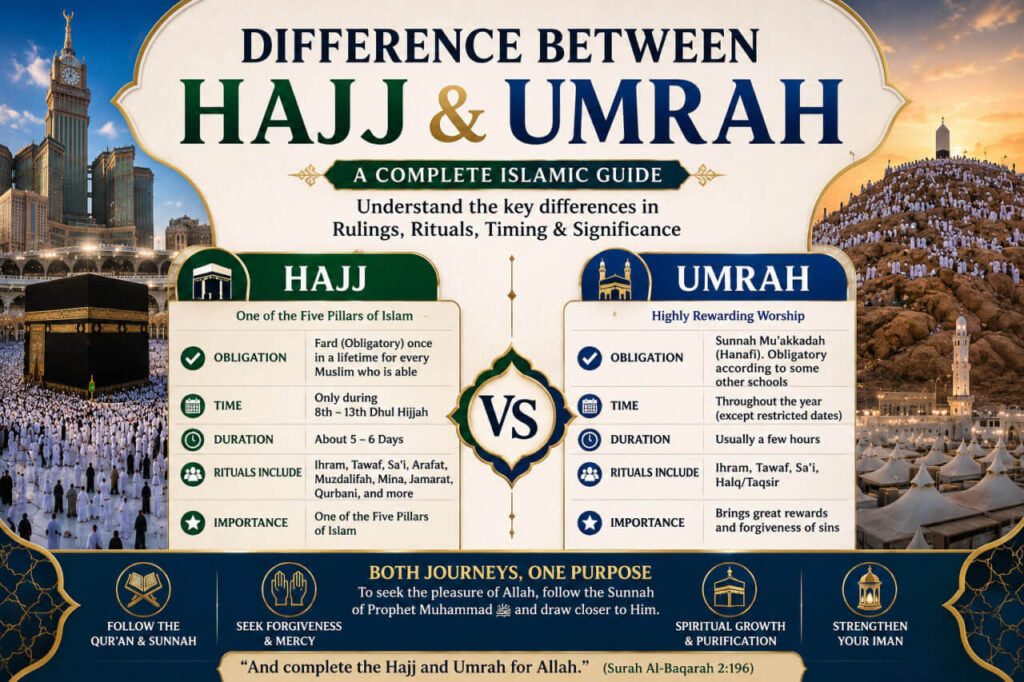
Hajj is one of the Five Pillars of Islam and is obligatory for every adult Muslim who is physically and financially capable of performing it at least once in a lifetime. Umrah, on the other hand, is a highly virtuous pilgrimage that can generally be performed throughout the year. According to the Hanafi school of Islamic jurisprudence, Umrah is Sunnah Mu’akkadah (an emphasized Sunnah), while some other schools consider it obligatory once in a lifetime.
Although both pilgrimages bring immense spiritual rewards, each has its own rulings, rituals, and significance.
What Is Hajj?
Hajj is the annual pilgrimage to Makkah performed during the Islamic month of Dhul Hijjah. It includes a series of prescribed rituals carried out over several days, such as standing at Arafat, spending the night in Muzdalifah, staying in Mina, performing Tawaf, Sa’i, and the symbolic stoning of the Jamarat.
Allah ﷻ says:
“Pilgrimage to the House is a duty owed to Allah by all people who are able to undertake it.”
(Surah Aal ‘Imran 3:97)
This verse establishes Hajj as an obligatory act of worship for every eligible Muslim.
What Is Umrah?
Umrah is a pilgrimage to the Holy Kaaba that consists of entering the state of Ihram, performing Tawaf, completing Sa’i between Safa and Marwah, and shaving or trimming the hair.
Unlike Hajj, Umrah can generally be performed throughout the year and requires fewer rituals.
Allah ﷻ says:
“And complete the Hajj and Umrah for Allah.”
(Surah Al-Baqarah 2:196)
Main Differences Between Hajj and Umrah
1. Obligation
The biggest difference is their ruling in Islam.
- Hajj: Fard (obligatory) once in a lifetime for every Muslim who is physically and financially capable.
- Umrah: According to the Hanafi school, Sunnah Mu’akkadah (highly recommended). Other schools, such as the Shafi’i and Hanbali, consider it obligatory once in a lifetime.
2. Time of Performance
Hajj can only be performed during specific days of Dhul Hijjah, beginning on the 8th and concluding on the 13th.
Umrah can generally be performed at any time of the year, except during certain periods when Hajj rituals are taking place and local regulations may apply.
3. Duration
Hajj usually takes five to six days to complete its essential rituals.
Umrah is much shorter and is often completed within a few hours, depending on the crowd and the pilgrim’s pace.
4. Rituals
Hajj Includes:
- Ihram
- Tawaf al-Qudum (where applicable)
- Sa’i
- Stay in Mina
- Standing at Arafat (Wuquf)
- Night at Muzdalifah
- Stoning the Jamarat
- Animal sacrifice (where applicable)
- Tawaf al-Ifadah
- Tawaf al-Wada’ (for many pilgrims)
Umrah Includes:
- Ihram
- Tawaf
- Sa’i
- Halq (shaving) or Taqsir (trimming the hair)
5. Importance
Hajj is one of the Five Pillars of Islam and is compulsory for eligible Muslims.
Umrah is a highly rewarding voluntary pilgrimage that brings forgiveness, spiritual purification, and closeness to Allah.
6. Number of Pilgrims
Hajj takes place once every year and gathers millions of Muslims during the same few days.
Umrah is performed throughout the year, so pilgrims arrive in Makkah continuously.
Comparison Table
| Feature | Hajj | Umrah |
|---|---|---|
| Ruling | Fard for eligible Muslims | Sunnah Mu’akkadah (Hanafi); obligatory according to some other schools |
| Time | Only during Dhul Hijjah | Generally throughout the year |
| Duration | About 5–6 days | Usually a few hours |
| Pillar of Islam | Yes | No |
| Includes Arafat | Yes | No |
| Includes Mina | Yes | No |
| Includes Muzdalifah | Yes | No |
| Includes Jamarat | Yes | No |
| Includes Tawaf | Yes | Yes |
| Includes Sa’i | Yes | Yes |
| Hair Trimming/Shaving | Yes | Yes |
Similarities Between Hajj and Umrah
Despite their differences, Hajj and Umrah share several important features.
Both require:
- Sincere intention (Niyyah).
- Entering the state of Ihram.
- Performing Tawaf around the Holy Kaaba.
- Performing Sa’i between Safa and Marwah.
- Shaving or trimming the hair before leaving Ihram.
- Observing the etiquettes and prohibitions of Ihram.
Both journeys are performed solely to seek the pleasure of Allah and follow the Sunnah of Prophet Muhammad ﷺ.
Which Is More Rewarding?
Hajj carries a greater obligation and reward because it is one of the Five Pillars of Islam.
The Prophet Muhammad ﷺ said:
“The accepted Hajj has no reward except Paradise.”
(Sahih al-Bukhari and Sahih Muslim)
At the same time, Umrah also carries immense rewards.
The Prophet ﷺ said:
“One Umrah to the next is an expiation for the sins committed between them.”
(Sahih al-Bukhari and Sahih Muslim)
This shows that both pilgrimages are among the greatest acts of worship in Islam.
Which Should You Perform First?
If Hajj has become obligatory upon you because you meet all the required conditions, then Hajj should take priority.
If Hajj is not yet obligatory or you are waiting for the opportunity to perform it, then performing Umrah is an excellent way to strengthen your faith, seek forgiveness, and prepare yourself spiritually for Hajj in the future.
Conclusion
Understanding the difference between Hajj and Umrah helps Muslims appreciate the unique significance of each pilgrimage. Hajj is an obligatory pillar of Islam performed during specific days of Dhul Hijjah, while Umrah is a highly recommended pilgrimage that can generally be performed throughout the year. Although their rulings and rituals differ, both journeys bring immense spiritual rewards, forgiveness of sins, and closeness to Allah. Every Muslim should strive to perform Hajj when it becomes obligatory and take every opportunity to perform Umrah whenever Allah grants the means.
Is Umrah Obligatory? A Comprehensive Analysis of Islamic Jurisprudence
Importance of Umrah in Islam – Benefits, Virtues & Spiritual Significance Explained
Meaning of Umrah – Complete Islamic Meaning Explained | Roman English Guide
What Is Umrah? A Comprehensive Guide | Meaning, Rules, Benefits & Step-by-Step Process
📖 Read in Urdu
حج اور عمرہ میں فرق: فقہ حنفی کی روشنی میں
اسلام میں بیت اللہ (اللہ کے گھر) کی زیارت کے دو طریقے ہیں: حج اور عمرہ۔ اگرچہ دونوں عبادتوں کا تعلق مکہ مکرمہ، کعبہ شریف اور احرام سے ہے، لیکن فقہ حنفی کے مطابق ان دونوں کی شرعی حیثیت، طریقے اور مناسک میں واضح اور بنیادی فرق ہے۔
ذیل میں فقہ حنفی کے مطابق ان دونوں کے اہم فرق کو تفصیل سے بیان کیا گیا ہے۔
1. شرعی حیثیت کا فرق (Legal Status)
فقہ حنفی میں کسی بھی عبادت کے درجات (فرض، واجب، سنت) بہت اہم ہوتے ہیں۔ اس اعتبار سے حج اور عمرہ میں یہ فرق ہے:
حج (فرضِ عین): حج اسلام کے پانچ بنیادی ارکان (pillars) میں سے ایک ہے۔ ہر اس عاقل، بالغ مسلمان پر زندگی میں ایک بار حج کرنا فرض ہے جو اس کی مالی اور جسمانی استطاعت (capability) رکھتا ہو۔ اس کا انکار کرنے والا دائرہ اسلام سے خارج ہو جاتا ہے۔
عمرہ (سنتِ مؤکدہ): فقہ حنفی کے راجح (preferred) موقف کے مطابق، عمرہ زندگی میں ایک بار کرنا سنتِ مؤکدہ ہے، فرض یا واجب نہیں۔ اگر کوئی شخص صاحبِ استطاعت ہونے کے باوجود عمرہ نہ کرے لیکن حج کر لے، تو وہ گناہ گار نہیں ہوگا، لیکن ایک بہت بڑے ثواب سے محروم رہے گا۔
2. وقت اور دنوں کا فرق (Timing)
حج کا وقت: حج سال میں صرف ایک ہی مخصوص وقت پر ہو سکتا ہے۔ اس کے مہینے شوال، ذوالقعدہ اور ذوالحجہ کے پہلے 10 دن ہیں۔ حج کے اہم مناسک مخصوص تاریخوں یعنی 8 ذوالحجہ سے 12 یا 13 ذوالحجہ (کل 5 یا 6 دن) کے درمیان ہی ادا کیے جاتے ہیں۔
عمرہ کا وقت: عمرہ سال کے کسی بھی مہینے اور کسی بھی دن ادا کیا جا سکتا ہے۔ اس کے لیے کوئی مہینا یا دن مخصوص نہیں ہے۔
فقہ حنفی کا مخصوص حکم: حنفی مسلک کے مطابق سال میں صرف 5 دن ایسے ہیں جن میں عمرہ کرنا مکروہِ تحریمی (strictly disliked/prohibited) ہے۔ یہ دن ہیں: 9 ذوالحجہ (عرفہ کا دن)، 10 ذوالحجہ (عید الاضحیٰ کا دن)، اور 11، 12، 13 ذوالحجہ (ایامِ تشریق)۔ ان 5 دنوں کے علاوہ پورے سال میں جب چاہیں عمرہ کر سکتے ہیں۔
3. مناسک اور ارکان کا فرق (Rituals)
فقہ حنفی کے مطابق حج اور عمرہ کے ارکان (فرائض) اور واجبات میں بڑا فرق ہے۔
الف) عمرہ کے کل 4 کام ہیں:
احرام: یہ عمرہ کے لیے شرط (pre-requisite) ہے۔
طواف (کعبہ کے 7 چکر): یہ عمرہ کا رکن/فرض ہے۔
سعی (صفا اور مروہ کے درمیان چلنا): یہ فقہ حنفی میں واجب ہے۔
حلق یا قصر (سر منڈوانا یا بال کٹوانا): یہ بھی واجب ہے، جس سے احرام کھل جاتا ہے۔
عمرہ میں اس کے علاوہ کوئی اور کام (جیسے منیٰ، عرفات، مزدلفہ جانا) نہیں ہوتا۔
ب) حج کے مناسک (حج بہت بڑی عبادت ہے):
فقہ حنفی کے مطابق حج میں 3 فرائض اور کئی واجبات ہیں:
حج کے فرائض (ارکان):
احرام باندھنا (شرط)۔
9 ذوالحجہ کو وقوفِ عرفات (عرفات کے میدان میں ٹھہرنا—یہ حج کا سب سے بڑا رکن ہے)۔
طوافِ زیارت کرنا (جو 10، 11 یا 12 ذوالحجہ کو کیا جاتا ہے)۔
حج کے واجبات:
وقوفِ مزدلفہ: 10 ذوالحجہ کی صبحِ صادق کے بعد مزدلفہ میں ٹھہرنا۔
رمی: جمرات (شیطانوں) کو کنکریاں مارنا۔
قربانی (ہدی): حجِ تمتع اور حجِ قران کرنے والوں پر قربانی واجب ہے۔
حلق یا قصر: بال کٹوانا یا منڈوانا۔
سعی: صفا اور مروہ کے درمیان چلنا۔
طوافِ وداع: آفاقی (مکہ سے باہر کے رہنے والے) مسافروں کے لیے وطن روانہ ہوتے وقت یہ طواف واجب ہے۔
4. خلاصہ: حج اور عمرہ کا موازنہ (Table)
فقہ حنفی کے مطابق دونوں کا آسان موازنہ (comparison) اس جدول سے سمجھیں:
| بنیادی فرق | حج (حج) | عمرہ (عمرہ) |
| شرعی حکم | فرض (زندگی میں ایک بار) | سنتِ مؤکدہ |
| دورانیہ (Duration) | مخصوص 5-6 دن (8 سے 12/13 ذوالحجہ) | صرف 2 سے 3 گھنٹے میں مکمل ہو جاتا ہے |
| وقوفِ عرفات | فرض/رکنِ اعظم (اس کے بغیر حج نہیں ہوتا) | عمرہ میں عرفات جانا نہیں ہوتا |
| مزدلفہ اور منیٰ | وہاں جانا اور قیام کرنا واجب/سنت ہے | عمرہ میں منیٰ اور مزدلفہ نہیں جانا ہوتا |
| رمی (کنکریاں مارنا) | واجب ہے | عمرہ میں رمی نہیں ہوتی |
| طوافِ وداع | باہر سے آنے والوں پر واجب ہے | عمرہ کرنے والوں پر طوافِ وداع نہیں ہے |
| خصوصی پابندی | سال میں صرف ایک بار مخصوص وقت پر | 9 سے 13 ذوالحجہ کے علاوہ سال کے کسی بھی دن |
5. جنایات (غلطی/کفارہ) کا فرق
فقہ حنفی میں اگر حج یا عمرہ کے دوران احرام کی کوئی خلاف ورزی ہو جائے (جیسے خوشبو لگانا، سلا ہوا کپڑا پہننا، یا کوئی رکن چھوٹ جانا)، تو اس پر دم (بکری کی قربانی) یا صدقہ لازم آتا ہے۔
حج میں گنجائش: چونکہ حج کے مناسک بہت زیادہ ہیں، اس لیے اگر حج کا کوئی واجب چھوٹ جائے تو اکثر صورتوں میں “دم” (قربانی) دے کر حج صحیح ہو جاتا ہے، حج ٹوٹتا نہیں (سوائے بیوی سے جنسی تعلق کے جو وقوفِ عرفات سے پہلے ہو)۔
عمرہ میں سختی: عمرہ کے مناسک مختصر ہیں۔ اگر کوئی شخص عمرہ کا طواف مکمل کرنے سے پہلے (احرام کی حالت میں) بیوی سے قربت کر لے، تو فقہ حنفی کے مطابق اس کا عمرہ فاسد (باطل) ہو جائے گا۔ اسے اس عمرہ کی قضا کرنی ہوگی اور کفارہ بھی دینا ہوگا۔
حاصلِ کلام (Conclusion)
آسان الفاظ میں، حج ایک بہت بڑا اور جامع سفر ہے جس میں بڑے میدانوں (عرفات، منیٰ، مزدلفہ) کی حاضری اور مخصوص تاریخوں کی پابندی شامل ہے، اور یہ اسلام کا فرض رکن ہے۔ جبکہ عمرہ ایک مختصر روحانی عبادت ہے جو صرف مسجدِ حرام کے اندر (طواف اور سعی) اور بال کٹوانے تک محدود ہے، اور یہ ایک عظیم سنت ہے۔
📖 Read in Urdu
Difference Between Hajj and Umrah: Hanafi Fiqh Ki Roshni Mein
Islam mein Baitullah (Allah ke ghar) ki ziyarat ke do tareeqe hain: Hajj aur Umrah. Agarche dono ibadaton ka ta’alluq Makkah Mukarramah, Kaaba aur Ihram se hai, lekin Hanafi Fiqh (Imam Abu Hanifah Rahimahullah ke maslak) ke mutabiq in dono ki shar’i haisiyat, tareeqe, aur manasik mein wazih aur bunyadi farq hai.
Niche Hanafi fiqh ke mutabiq in dono ke ahem farq ko tafseel se bayan kiya gaya hai.
1. Shar’i Haisiyat Ka Farq (Legal Status)
Hanafi Fiqh mein kisi bhi ibadat ke darjaat (Farz, Wajib, Sunnat) bohot ahem hote hain. Is aitbar se Hajj aur Umrah mein yeh farq hai:
Hajj (Farz-e-Ayn): Hajj Islam ke panch bunyadi arkan (pillars) mein se ek hai. Har us aaqil, baaligh musalman par zindagi mein ek baar Hajj karna Farz hai jo is ki maali aur jismani istata’at (capability) rakhta ho. Is ka inkaar karne wala daira-e-Islam se kharij ho jata hai.
Umrah (Sunnat-e-Mu’akkadah): Hanafi Fiqh ke rajih (preferred) mauqaf ke mutabiq, Umrah zindagi mein ek baar karna Sunnat-e-Mu’akkadah (highly emphasized sunnah) hai, farz ya wajib nahi hai. Agar koi shakhs sahib-e-istata’at hone ke bawajood Umrah na kare par Hajj kar le, toh woh gunahgar nahi hoga, lekin ek bafut bade thawab se mehroom rahega.
2. Waqt Aur Dino Ka Farq (Timing)
Hajj Ka Waqt: Hajj saal mein sirf ek hi makhsoos waqt par ho sakta hai. Is ke mahine Shawwal, Dhul-Qa’dah, aur Dhul-Hijjah ke pehle 10 din hain. Hajj ke ahem manasik makhsoos tareekhon yaani 8 Dhul-Hijjah se 12 ya 13 Dhul-Hijjah (kul 5 ya 6 din) ke darmiyan hi ada kiye jate hain.
Umrah Ka Waqt: Umrah saal ke kisi bhi mahine aur kisi bhi din ada kiya ja sakta hai. Is ke liye koi mahina ya din makhsoos nahi hai.
Hanafi Maslak Ka Makhsoos Hukm: Hanafi fiqh ke mutabiq saal mein sirf 5 din aise hain jin mein Umrah karna Makruh-e-Tahreemi (strictly disliked/prohibited) hai. Yeh din hain: 9 Dhul-Hijjah (Arafah ka din), 10 Dhul-Hijjah (Eid-ul-Adha/Yaoom-un-Nahr), aur 11, 12, 13 Dhul-Hijjah (Ayyam-e-Tashreeq). In 5 dinon ke alawa poore saal mein jab chahein Umrah kar sakte hain.
3. Manasik Aur Arkan Ka Farq (Rituals)
Hanafi Fiqh ke mutabiq Hajj aur Umrah ke arkan (Faraiz) aur Wajibath mein bada farq hai.
A) Umrah Ke Kul 4 Kaam Hain:
Ihram: Yeh Umrah ke liye Shart (pre-requisite) hai.
Tawaf (Kaaba ke 7 chakkar): Yeh Umrah ka Rukan/Farz hai.
Sa’i (Safa aur Marwa ke darmiyan chalna): Yeh Hanafi fiqh mein Wajib hai.
Halq ya Qasr (Sar mundwana ya baal katwana): Yeh bhi Wajib hai, jis se ihram khul jata hai.
Umrah mein is ke alawa koi aur kaam (jaise Mina, Arafat, Muzdalifah jana) nahi hota.
B) Hajj Ke Manasik (Hajj Bohot Badi Ibadat Hai):
Hanafi fiqh ke mutabiq Hajj mein 3 Faraiz اور kai Wajibath hain:
Hajj ke Faraiz (Arkan):
Ihram bandhna (Shart).
9 Dhul-Hijjah ko Wuqoof-e-Arafat (Arafat ke maidan mein theherna—yeh Hajj ka sabse bada rukan hai).
Tawaf-e-Ziyarat karna (jo 10, 11 ya 12 Dhul-Hijjah ko kiya jata hai).
Hajj ke Wajibath:
Wuqoof-e-Muzdalifah: 10 Dhul-Hijjah ki subah sadiq ke baad Muzdalifah mein theherna.
Rami: Jamarat (shaitano) ko kankriyan marna.
Qurbani (Hady): Hajj-e-Tamattu’ aur Hajj-e-Qiran karne walon par qurbani wajib hai.
Halq ya Qasr: Baal katwana.
Sa’i: Safa aur Marwa ke darmiyan chalna.
Tawaf-e-Wada (Alwada’ee Tawaf): Afaaqi (Makkah se baahar ke rehne wale) musafiron ke liye dunya se rukhshat hote waqt yeh tawaf wajib hai.
4. Khulasa: Hajj aur Umrah Ka Comparison (Table)
Hanafi Fiqh ke mutabiq dono ka aasan mawaazna (comparison) is table se samjhein:
| Bunyadi Farq | Hajj (حج) | Umrah (عمرہ) |
|---|---|---|
| Shar’i Hukm | Farz (Zindagi mein ek baar) | Sunnat-e-Mu’akkadah |
| Dauraniya (Duration) | Makhsoos 5-6 din (8 se 12/13 Dhul-Hijjah) | Sirf 2 se 3 ghante mein mukammal ho jata hai |
| Wuqoof-e-Arafat | Farz/Rukan-e-Azam (Is ke baghair Hajj nahi hota) | Umrah mein Arafat jana nahi hota |
| Muzdalifah & Mina | Wahan jana aur qayam karna Wajib/Sunnat hai | Umrah mein Mina aur Muzdalifah nahi jana hota |
| Rami (Kankriyan marna) | Wajib hai | Umrah mein rami nahi hoti |
| Tawaf-e-Wada | Baahar se aane walon par Wajib hai | Umrah karne walon par Tawaf-e-Wada nahi hai |
| Khusoosi Pabandi | Saal mein sirf ek baar makhsoos waqt par | 9 se 13 Dhul-Hijjah ke alawa saal ke kisi bhi din |
5. Jinayat (Galti/Kaffarah) Ka Farq
Hanafi fiqh mein agar Hajj ya Umrah ke dauran Ihram ki koi khilaf-warzi ho jaye (jaise khushbu lagana, sila hua kapda pehenna, ya koi rukan chhut jana), toh us par Dam (bakri ki qurbani) ya Sadaqah lazim aata hai.
Hajj mein gunjaish: Chunke Hajj ke manasik bohot zyada hain, is liye agar Hajj ka koi wajib chhut jaye toh aksar sooraton mein “Dam” (qurbani) de kar Hajj sahih ho jata hai, Hajj toot’ta nahi (siwaye biwi se jinsi ta’alluq ke jo wuqoof-e-arafat se pehle ho).
Umrah mein sakhti: Umrah ke manasik mukhtasar hain. Agar koi shakhs Umrah ka tawaf mukammal karne se pehle (ihram ki halat mein) biwi se qurbat kar le, toh Hanafi fiqh ke mutabiq us ka Umrah faasid (batil) ho jayega. Use us Umrah ki qaza karni hogi aur kaffarah bhi dena hoga.
Hasil-e-Kalam (Conclusion)
Aasan alfaaz mein, Hajj ek bohot bada aur jame safar hai jis mein bade maidaano (Arafat, Mina, Muzdalifah) ki hazri aur makhsoos tarikhon ki pabandi shamil hai, aur yeh Islam ka farz rukan hai. Jabke Umrah ek mukhtasar roohani ibadat hai jo sirf Masjid-e-Haram ke andar (Tawaf aur Sa’i) aur baal katwane tak mehdood hai, aur yeh ek azeem sunnat hai.