Meaning of Umrah
Umrah (العُمْرَة) is one of the most rewarding acts of worship in Islam. It is a sacred pilgrimage to the Holy Kaaba in Makkah, performed to seek the pleasure of Allah ﷻ, earn His forgiveness, and strengthen one’s faith. Unlike Hajj, which is performed only during specific days of Dhul Hijjah, Umrah can generally be performed throughout the year, making it accessible to Muslims whenever they are physically and financially able.
The journey of Umrah is not simply a visit to Makkah. It is a spiritual journey that allows Muslims to leave behind worldly distractions and devote themselves entirely to the worship of Allah. Every ritual performed during Umrah carries deep historical and spiritual significance, reminding believers of the sacrifices made by Prophet Ibrahim (AS), Sayyidah Hajar (AS), Prophet Ismail (AS), and the teachings of Prophet Muhammad ﷺ.
What Does the Word “Umrah” Mean?
The word Umrah (العُمْرَة) is derived from the Arabic root (ع م ر), which means to visit, to populate, or to maintain a place. In Islamic terminology, Umrah specifically means visiting the Sacred House of Allah (the Holy Kaaba) while performing prescribed acts of worship according to the Sunnah of Prophet Muhammad ﷺ.
Unlike an ordinary visit, Umrah is performed solely for the sake of Allah. It combines physical acts of worship with sincere repentance, humility, remembrance of Allah, and complete submission to His commands.
The Islamic Meaning of Umrah
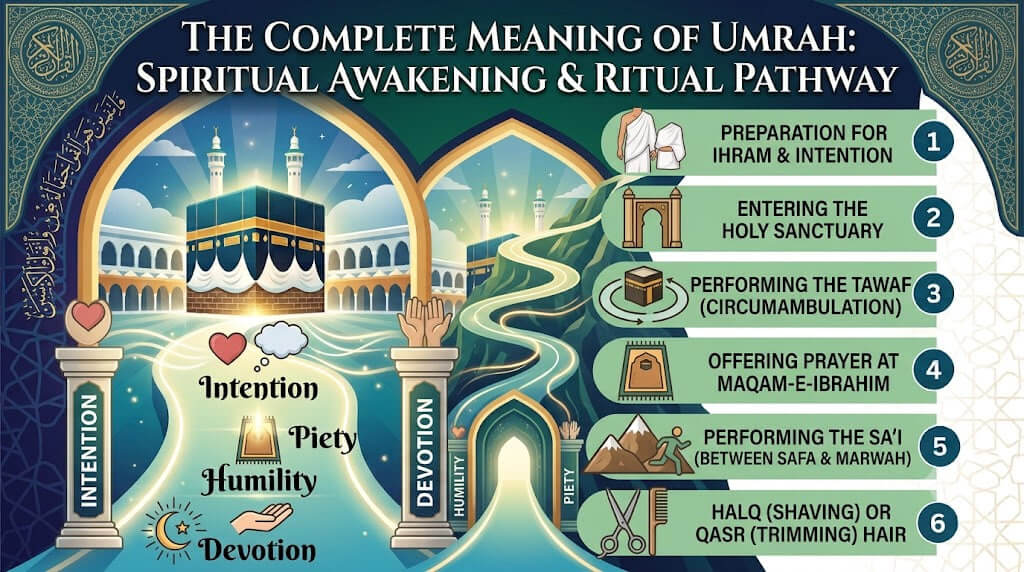
In Islamic law (Shariah), Umrah is a pilgrimage that consists of four essential acts:
- Entering the state of Ihram from the designated Miqat.
- Performing Tawaf by circling the Holy Kaaba seven times.
- Performing Sa’i between the hills of Safa and Marwah seven times.
- Shaving or trimming the hair to complete the Umrah and leave the state of Ihram.
These rituals symbolize obedience, patience, sacrifice, and devotion to Allah ﷻ.
Allah says in the Holy Qur’an:
“And complete the Hajj and Umrah for Allah.”
(Surah Al-Baqarah 2:196)This verse clearly shows that Umrah is an act of worship performed solely for the pleasure of Allah.
Why Is Umrah Called the Lesser Pilgrimage?
Umrah is often referred to as the Lesser Pilgrimage because it includes some of the rituals performed during Hajj but does not include all of them.
Unlike Hajj, Umrah:
- Can be performed almost any time during the year.
- Does not require staying in Mina, Arafat, or Muzdalifah.
- Takes only a few hours to complete in most cases.
- Has fewer rituals compared to Hajj.
Although Umrah is shorter and simpler than Hajj, its spiritual rewards are immense.
The Purpose of Umrah
The primary purpose of Umrah is to seek closeness to Allah and purify the soul. It provides Muslims with an opportunity to repent sincerely, ask for forgiveness, and renew their commitment to following the teachings of Islam.
Many believers describe Umrah as a life-changing experience because it strengthens faith, softens the heart, and increases love for Allah and His Messenger ﷺ.
During Umrah, pilgrims remember the unwavering faith of Prophet Ibrahim (AS), the patience of Sayyidah Hajar (AS), and the obedience of Prophet Ismail (AS). These lessons inspire Muslims to remain steadfast during the challenges of life.
Spiritual Meaning of Umrah
Every ritual of Umrah carries a deeper spiritual message:
- Ihram teaches equality, humility, and sincerity before Allah.
- Tawaf symbolizes that Allah should always remain the center of a believer’s life.
- Sa’i reminds Muslims to trust Allah while making every possible effort, just as Sayyidah Hajar (AS) searched for water.
- Halq or Taqsir (shaving or trimming the hair) represents renewal, purification, and a fresh beginning after completing the acts of worship.
Together, these rituals transform Umrah into a journey of spiritual purification rather than merely a physical pilgrimage.
Umrah in the Light of Hadith
The Messenger of Allah ﷺ emphasized the great virtues of Umrah.
Abu Hurairah (RA) narrated that the Prophet ﷺ said:
“One Umrah to the next is an expiation for the sins committed between them, and the accepted Hajj has no reward except Paradise.”
(Sahih al-Bukhari and Sahih Muslim)Another narration states:
“Perform Hajj and Umrah consecutively, for they remove poverty and sins just as the furnace removes impurities from iron, gold and silver.”
(Jami’ at-Tirmidhi)
These authentic narrations highlight that Umrah is not only a source of forgiveness but also a means of attaining immense blessings in both this world and the Hereafter.
A Journey of Love and Devotion
For every Muslim, Umrah is a journey of love for Allah and His beloved Messenger ﷺ. Standing before the Holy Kaaba, offering prayers in Masjid al-Haram, drinking Zamzam water, and visiting the blessed city of Madinah create memories that remain in a believer’s heart forever.
The simplicity of Umrah teaches that true honor is not found in wealth or status but in sincere worship and obedience to Allah.
Conclusion
The meaning of Umrah extends far beyond its literal definition of “visiting.” It is a sacred journey of faith, repentance, devotion, and spiritual renewal. Through the rituals of Ihram, Tawaf, Sa’i, and Halq or Taqsir, Muslims strengthen their relationship with Allah, seek His forgiveness, and follow the noble Sunnah of Prophet Muhammad ﷺ.
Whether you are planning your first Umrah or simply seeking knowledge, understanding the true meaning of Umrah helps you appreciate the wisdom and beauty behind every step of this blessed pilgrimage.
What Is Umrah? A Comprehensive Guide | Meaning, Rules, Benefits & Step-by-Step Process
📖 Read in Urdu
عمرہ کا معنی: لغوی، روحانی اور فقہی جہتیں
عمرہ کے مقدس سفر کو مکمل طور پر سمجھنے کے لیے محض مکہ مکرمہ کا سفر کرنے اور کعبہ کے گرد چکر لگانے جیسے ظاہری افعال سے آگے دیکھنا ضروری ہے۔ عمرہ کے حقیقی معنی کو سمجھنے کے لیے اس کے لغوی مادّے، شریعت میں اس کی تعریف اور اس گہرے روحانی انقلاب کو جاننا ضروری ہے جو یہ ایک مسلمان کی زندگی میں برپا کرتا ہے۔
1. عمرہ کا لغوی معنی (Lughwi Meaning)
عربی زبان میں لفظ “عمرہ” (عُمْرَة) کا مادہ ع-م-ر (عین-میم-را) ہے۔ اسی مادّے سے دیگر عربی الفاظ جیسے اعتِمار (زیارت کرنا)، تعمیر (بنانا/آباد کرنا) اور عمر (زندگی/حیات) بنتے ہیں۔
لغوی اعتبار سے عمرہ کے تین خوبصورت معنی ہیں:
زیارت کرنا: عام الفاظ میں اس کا مطلب محبت، احترام اور تعلق قائم کرنے کی نیت سے کسی جگہ یا شخصیت کے پاس جانا ہے۔
آباد کرنا یا پروان چڑھانا: اس کا مطلب کسی جگہ کو زندگی بخشنا، اسے آباد کرنا یا اسے رونق اور مصروفیت سے نوازنا ہے۔
ارادہ کرنا/قصد کرنا: کسی مخصوص اور معزز منزل کی طرف سفر کا ارادہ کرنا۔
روحانی ربط: جب ایک زائر عمرہ ادا کرتا ہے، تو وہ دراصل اللہ کے گھر کی “زیارت” کر رہا ہوتا ہے تاکہ اس کے مقدس مقامات کو دعاؤں، ذکر اور بندگی سے “آباد” کرے، اور اس طرح اپنی روح کو ایک نئی زندگی بخشے۔
2. عمرہ کا شرعی معنی (Shariah Meaning)
اسلامی فقہ میں عمرہ کی ایک خاص اور جامع شرعی تعریف ہے۔ اس سے مراد وہ مخصوص عبادت ہے جو چند طے شدہ روحانی شرائط کے تحت ادا کی جاتی ہے۔
شرعی طور پر عمرہ کی تعریف یہ ہے:
“مخصوص حدود (میقات) سے احرام باندھ کر بیت اللہ کی زیارت کرنا، کعبہ شریف کے گرد طواف کرنا، صفا اور مروہ کی پہاڑیوں کے درمیان سعی کرنا، اور اپنے سر کے بال منڈوا کر یا کٹوا کر احرام کی حالت سے باہر آنا۔”
حج کے برعکس (جو کہ اسلام کا ایک بنیادی رکن ہے اور جس کے لیے سال کا ایک مخصوص وقت مقرر ہے)، عمرہ کو “چھوٹا حج” کہا جاتا ہے۔ یہ سال میں کسی بھی وقت ادا کیا جا سکتا ہے اور اس میں میدانِ عرفات میں ٹھہرنا، مزدلفہ میں رات گزارنا یا منیٰ میں جمرات کو کنکریاں مارنا شامل نہیں ہوتا۔
3. عمرہ کا روحانی معنی اور فلسفہ
عمرہ کے ظاہری ارکان دراصل ایک گہرے باطنی اور روحانی سچ کے عکاس ہیں۔ اس کا ہر عمل اپنے اندر ایک گہرا مقصد رکھتا ہے:
الف۔ احرام کا معنی: کامل مساوات اور انا کا خاتمہ
جب ایک زائر احرام پہنتا ہے—مردوں کے لیے بغیر سلی سفید چادریں اور خواتین کے لیے سادہ، باوقار لباس—تو وہ اپنی تمام تر دنیاوی شناختوں کو پیچھے چھوڑ دیتا ہے۔
مساوات: بادشاہ ہو یا عام شہری، امیر ہو یا غریب، عالم ہو یا عام انسان، سب اللہ کے حضور ایک جیسے دکھائی دیتے ہیں۔ دولت، سماجی رتبہ، قومیت اور رنگ و نسل کا ہر فرق یکسر مٹ جاتا ہے۔
موت کی یاد: احرام کی سفید چادریں انسان کے کفن سے گہری مشابہت رکھتی ہیں۔ یہ اس بات کا عملی احساس ہے کہ ہمیں ایک دن اس دنیا سے اپنے اعمال کے سوا کچھ بھی لیے بغیر خالی ہاتھ کوچ کر جانا ہے۔
ب۔ تلبیہ کا معنی: مکمل سپردگی
جیسے ہی زائر احرام میں داخل ہوتا ہے، وہ مسلسل تلبیہ پکارنا شروع کر دیتا ہے:
“لبّیک اللّٰہم لبّیک…” (میں حاضر ہوں، اے اللہ! میں حاضر ہوں…)
یہ پکار دراصل حضرت ابراہیم علیہ السلام کی اس ابدی پکار کا جواب ہے جو انہوں نے انسانوں کو حج کے لیے دی تھی۔ یہ اپنے رب کے حضور مکمل سپردگی کا اعلان ہے کہ بندہ اپنے گھر، آرام و سکون، خاندان اور خواہشات کو چھوڑ کر صرف اپنے خالق کی آواز پر لبیک کہہ رہا ہے۔
ج۔ طواف کا معنی: خدا کو اپنی کائنات کا مرکز بنانا
کعبہ شریف کے گرد گھڑی کی مخالف سمت میں سات چکر لگانا طواف کہلاتا ہے۔
جس طرح کائنات کے سیارے سورج کے گرد اور الیکٹران نیوکلیئس کے گرد گھومتے ہیں، بالکل اسی طرح زائر کعبہ کے گرد طواف کرتا ہے۔
یہ اس بات کی علامت ہے کہ اللہ ہی مومن کی زندگی، خیالات اور اعمال کا اصل مرکز ہے۔ کائنات کی ہر چیز منشائے الٰہی کے گرد طواف کر رہی ہے، اور زائر شعوری طور پر اپنی روح کو اس کائناتی تسلیم و رضا کے ساتھ جوڑتا ہے۔
د۔ سعی کا معنی: الٰہی رحمت پر کامل بھروسہ (توکل)
صفا اور مروہ کے درمیان چلنا اور دوڑنا حضرت ہاجرہ علیہا السلام کی اس تڑپ اور جدوجہد کی یادگار ہے، جب وہ اپنے پیاسے شیر خوار بیٹے حضرت اسماعیل علیہ السلام کے لیے پانی کی تلاش میں ان پہاڑیوں کے درمیان دوڑ رہی تھیں۔
یہ انسانی کوشش، محنت اور امید کی علامت ہے۔
سعی کا سبق یہ ہے کہ انسان کو اپنی طرف سے پوری کوشش کرنی چاہیے، لیکن حتمی بھروسہ اور توکل اللہ کی ذات پر ہونا چاہیے، جو ایسے ذرائع سے پانی (رزق، سکون اور ہدایت) چشمے کی صورت میں جاری کر سکتا ہے جس کا انسان تصور بھی نہیں کر سکتا۔
ہ۔ حلق یا قصر کا معنی: نئی پیدائش اور عاجزی
سر کے بال منڈوانا (حلق) یا کٹوانا (قصر) تسلیم و رضا کا آخری مرحلہ ہے۔ تاریخ گواہ ہے کہ قدیم دور میں غلام کے بال کاٹنا اپنے آقا کے سامنے مکمل جھک جانے کی نشانی سمجھا جاتا تھا۔ ایک مسلمان کے لیے عمرہ کے اختتام پر بال کٹوانا دراصل اپنی انا، تکبر، فخر اور ماضی کے گناہوں کو ہمیشہ کے لیے منڈوا دینے کے مترادف ہے، جس کے بعد وہ روحانی طور پر پاک ہو کر ایک بالکل نئے انسان کی طرح ابھرتا ہے۔
خلاصہ (Summary)
| پہلو | بنیادی معنی |
| لغوی | زیارت کرنا، آباد کرنا، اور ارادہ کرنا۔ |
| شرعی | احرام، طواف، سعی اور بال کٹوا کر کعبہ کی زیارت کرنا۔ |
| روحانی | انا کا خاتمہ، مساوات کا اظہار، زندگی کو خدا کے گرد مرکوز کرنا اور خدا کی رحمت پر غیر متزلزل بھروسہ کرنا۔ |
📖 Read in Hindi
Umrah Ka Matlab: Laghwi, Ruhani, aur Shar’i Pehlu
Umrah ke muqaddas safar ko mukammal taur par samajhne ke liye sirf Makkah Mukarramah ka safar karne aur Kaaba ke gird chakkar lagane jaise zahiri afaal se aage dekhna zaroori hai. Umrah ke haqeeqi matlab ko samajhne ke liye iske laghwi maani, shariat mein iski tareef, aur us gehre ruhani inqilab ko janna zaroori hai jo yeh ek Musalman ki zindagi mein barpa karta hai.
1. Umrah Ka Laghwi Maani (Linguistic Meaning)
Arabi zaban mein lafz “Umrah” (عُمْرَة) ka mada ‘Ayn-Meem-Ra (ع-م-ر) hai. Is mada (root) se doosre arabi alfaaz jaise I’timar (ziyarat karna), Ta’meer (banana/aabaad karna), aur Umr (zindagi/hayat) bante hain.
Laghwi aitbar se Umrah ke teen khoobsurat maani hain:
Ziyarat Karna: Aam alfaaz mein iska matlab mohabbat, aitram aur taluq qaim karne ki niyat se kisi jagah ya shakhsiyat ke paas jana hai.
Aabaad Karna ya Parwan Chadhana: Iska matlab kisi jagah ko zindagi bakhshna, use aabaad karna, ya use ronaq aur masroofiyat se nawazna hai.
Iradah Karna / Qasd Karna: Kisi makhsoos aur muazzaz manzil ki taraf safar ka iradah karna.
Ruhani Rabt: Jab ek zair Umrah ada karta hai, to woh darasal Allah ke ghar ki “ziyarat” kar raha hota hai taake uske muqaddas maqamat ko duayon, zikr aur bandagi se “aabaad” kare, aur is tarah apni rooh ko ek nayi zindagi bakhshe.
2. Umrah Ka Shar’i Maani (Shariah Meaning)
Islamic Fiqh mein Umrah ki ek khaas aur jamay shar’i tareef hai. Is se muraad woh makhsoos ibadat hai jo chand tay shuda ruhani sharait ke tehat ada ki jati hai.
Shar’i taur par Umrah ki tareef yeh hai:
“Makhsoos hudood (Miqat) se Ihram baandh kar Baitullah ki ziyarat karna, Kaaba shareef ke gird Tawaf karna, Safa aur Marwah ki pahariyon ke darmiyan Sa’i karna, aur apne sar ke baal mundwa kar ya katwa kar (Halq ya Qasr) Ihram ki halat se bahar aana.”
Hajj ke bar-aks (jo ke Islam ka ek bunyadi rukan hai aur jis ke liye saal ka ek makhsoos waqt muqarrar hai), Umrah ko “Chota Hajj” kaha jata hai. Yeh saal mein kisi bhi waqt ada kiya ja sakta hai aur is mein Maidan-e-Arafat mein theharna, Muzdalifah mein raat guzarne ya Mina mein jameelat ko kankariyan marna shamil nahi hota.
3. Umrah Ka Ruhani Maani aur Falsafah
Umrah ke zahiri arkaan darasal ek gehre baatni aur ruhani sach ke akkass hain. Iska har amal apne andar ek gehra maqsad rakhta hai:
A. Ihram Ka Maani: Kaamil Masawaat aur Ana (Ego) Ka Khatmah
Jab ek zair Ihram pehanta hai—mardon ke liye bagair sili safaid chadarain aur khawateen ke liye sada, ba-waqar libas—to woh apni tamam tar dunya-wi shanakht ko peeche chodh deta hai.
Masawaat: Badshah ho ya aam shakhs, ameer ho ya ghareeb, aalim ho ya aam insan, sab Allah ke huzoor ek jaise dikhaye dete hain. Daulat, samajit rutbah, qaumiyat aur rang o nasal ka har farq yak-sar mit jata hai.
Maut Ki Yaad: Ihram ki safaid chadarain insan ke kafan se gehri mushabahat rakhti hain. Yeh is baat ka amli ehsaas hai ke hamein ek din is dunya se apne aamal ke siwa kuch bhi liye bagair khali hath kooch kar jana hai.
B. Talbiyah Ka Maani: Mukammal Supardagi
Jaise hi zair Ihram mein dakhil hota hai, woh musalsal Talbiyah pukarna shuru kar deta hai:
“Labbayk Allahumma Labbayk…” (Main hazir hoon, ae Allah! Main hazir hoon…)
Yeh pukar darasal Hazrat Ibrahim (A.S) ki us abdi pukar ka jawab hai jo unhone insanon ko Hajj ke liye di thi. Yeh apne rab ke huzoor mukammal supardagi ka elaan hai ke banda apne ghar, aaram o sukoon, khandan aur khwahishat ko chodh kar sirf apne khaliq ki aawaz par labbayk keh raha hai.
C. Tawaf Ka Maani: Khuda Ko Apni Kainaat Ka Markaz Banana
Kaaba shareef ke gird clock-wise ke ulte (counter-clockwise) saat chakkar lagana Tawaf kehlata hai.
Jis tarah kainaat ke sayyare (planets) sooraj ke gird aur electrons nucleus ke gird ghoomte hain, bilkul usi tarah zair Kaaba ke gird tawaf karta hai.
Yeh is baat ki alamat hai ke Allah hi momin ki zindagi, khayalat aur aamal ka asal markaz hai. Kainaat ki har cheez masha-e-ilahi ke gird tawaf kar rahi hai, aur zair sha’oori taur par apni rooh ko is kainati tasleem o raza ke sath jodta hai.
D. Sa’i Ka Maani: Ilahi Rehmat Par Kaamil Bharosa (Tawakkul)
Safa aur Marwah ke darmiyan chalna aur daurna Hazrat Hajar (A.S) ki us tarap aur jad-o-jehad ki yaadgar hai, jab woh apne pyase sheer-khwar bete Hazrat Ismail (A.S) ke liye pani ki talash mein in pahariyon ke darmiyan daur rahi thi.
Yeh insani koshish, mehnat aur umeed ki alamat hai.
Sa’i ka sabaq yeh hai ke insan ko apni taraf se poori koshish karni chahiye, lekin hatmi bharosa aur Tawakkul Allah ki zaat par hona chahiye, jo aise zaraye se pani (rizq, sukoon aur hidayat) chashme ki surat mein jari kar sakta hai jis ka insan tasawwur bhi nahi kar sakta.
E. Halq ya Qasr Ka Maani: Nayi Paidaish aur Aajzi
Sar ke baal mundwana (Halq) ya katwana (Qasr) tasleem o raza ka aakhri marhala hai. Tareekh gawah hai ke qadeem daur mein ghulam ke baal kaatna apne aaqa ke samne mukammal jhuk jane ki nishani samjha jata tha. Ek Musalman ke liye Umrah ke ikhtitam par baal katwana darasal apni ana, takabbur, fakar aur maazi ke gunahon ko hamesha ke liye mundwa dene ke mutaradif hai, jis ke baad woh ruhani taur par pak ho kar ek bilkul naye insan ki tarah ubharta hai.
Khulasah (Summary)
| Pehlu | Bunyadi Maani |
| Laghwi | Ziyarat karna, aabaad karna, aur iradah karna. |
| Shar’i | Ihram, Tawaf, Sa’i aur baal katwa kar Kaaba ki ziyarat karna. |
| Ruhani | Ana (ego) ka khatmah, masawaat ka izhar, zindagi ko Khuda ke gird markooz karna aur Khuda ki rehmat par aitmad karna. |